
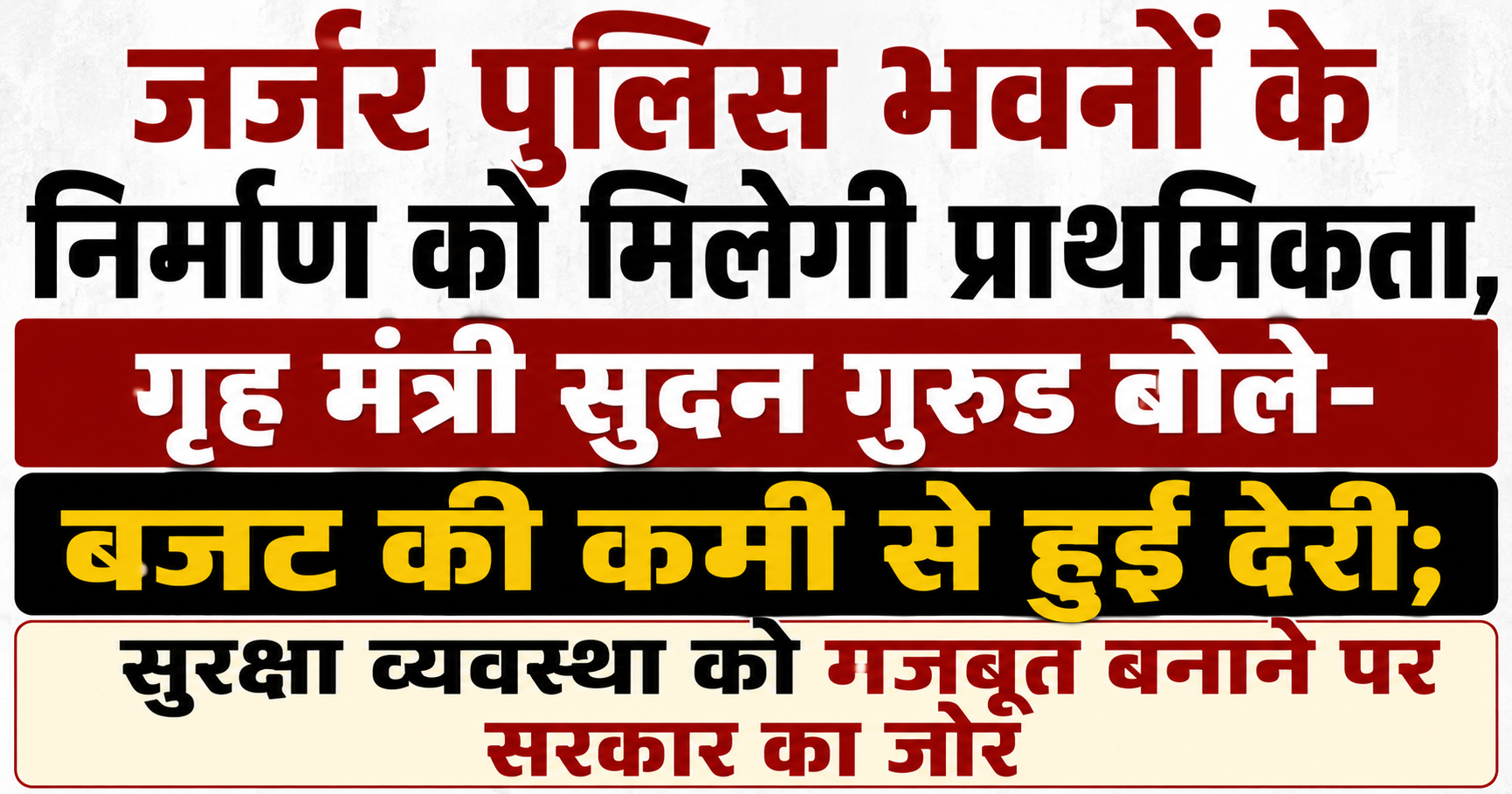
Government to Prioritize Construction of Dilapidated Police Buildings, Home Minister Sudan Gurung Says Budget Constraints Caused Delays
Kathmandu, Nepal | Correspondent
The Government of Nepal has indicated a major initiative to strengthen the country's internal security infrastructure. Home Minister Sudan Gurung acknowledged that many police stations and outposts across the country are operating from old, dilapidated, and structurally weak buildings. He admitted that construction and renovation projects have been delayed due to budget constraints but assured that the government is now preparing to accelerate these projects. The construction and modernization of police buildings will be given priority in the coming years to provide police personnel with better working conditions and improve public security services.
The Home Minister emphasized that a strong law enforcement system depends not only on the size of the police force or the availability of modern equipment but also on robust infrastructure. Safe and modern police buildings enable officers to perform their duties more efficiently while increasing public confidence in the country's security system. He has instructed the concerned departments to prepare a list of dilapidated police buildings and begin reconstruction work in phases.
Concern Over the Condition of Police Buildings
Sudan Gurung stated that many police stations and outposts, particularly in rural and remote areas of Nepal, have become outdated and structurally weak. Several facilities lack basic amenities, while others have deteriorated over time due to aging and the impact of natural disasters.
He noted that such conditions make it difficult for police personnel to perform their duties effectively and may also affect the quality of services provided to the public.
Budget Shortage a Major Challenge
The Home Minister said the government remains committed to improving police infrastructure, but limited financial resources over the past few years have slowed construction and renovation work.
He explained that the government must allocate resources across multiple sectors, including education, healthcare, transportation, energy, and public security. Despite these competing priorities, strengthening police infrastructure remains an important objective.
Construction Work to Begin Soon
Gurung assured that the government will make every effort to allocate sufficient funds for police building projects in upcoming budgets.
He said authorities will first identify police offices that are in the poorest condition. Reconstruction and new construction projects will then be carried out in phases according to priority.
Stronger Infrastructure to Enhance Security
According to the Home Minister, improving police infrastructure will significantly strengthen Nepal's internal security system.
Along with new buildings, the government plans to provide better communication systems, advanced technology, and modern equipment to enable police to respond more effectively to crime, emergencies, and disaster management.
Better Working Environment for Police Personnel
The government believes that modern and secure police facilities will improve both the morale and efficiency of law enforcement officers.
The new buildings are expected to include administrative offices, record rooms, interrogation rooms, women's help desks, barracks, and other essential facilities that will enhance policing services.
Special Focus on Earthquake-Resistant Construction
As Nepal is highly vulnerable to earthquakes, the government plans to construct all new police buildings according to earthquake-resistant engineering standards.
The Home Minister said this will help ensure that police services remain operational even during major natural disasters.
Citizens Expected to Benefit
Security experts believe that stronger police infrastructure will directly benefit the public.
Modern facilities are expected to improve complaint registration, criminal investigations, emergency response, and overall law enforcement efficiency, resulting in better public services.
Phased Development Plan
The Ministry of Home Affairs announced that a nationwide survey of police buildings will be conducted to assess their condition.
Based on the survey, reconstruction and renovation priorities will be determined. Buildings in the most critical condition will receive immediate attention, while other projects will proceed according to budget availability.
Experts Welcome the Decision
Security analysts have welcomed the Home Minister's announcement, stating that strong police infrastructure forms the foundation of an effective internal security system.
They believe that providing officers with safe, modern workplaces will enable them to deliver faster, more efficient, and higher-quality services to the public.
Home Minister Sudan Gurung's acknowledgment of the poor condition of police buildings and the impact of budget shortages reflects the government's commitment to addressing long-standing infrastructure challenges. By prioritizing the construction and modernization of police facilities, Nepal aims to improve law enforcement efficiency, strengthen internal security, and provide better public services. Once implemented, the initiative is expected to create a safer working environment for police personnel while enhancing public confidence in the country's security institutions.


