
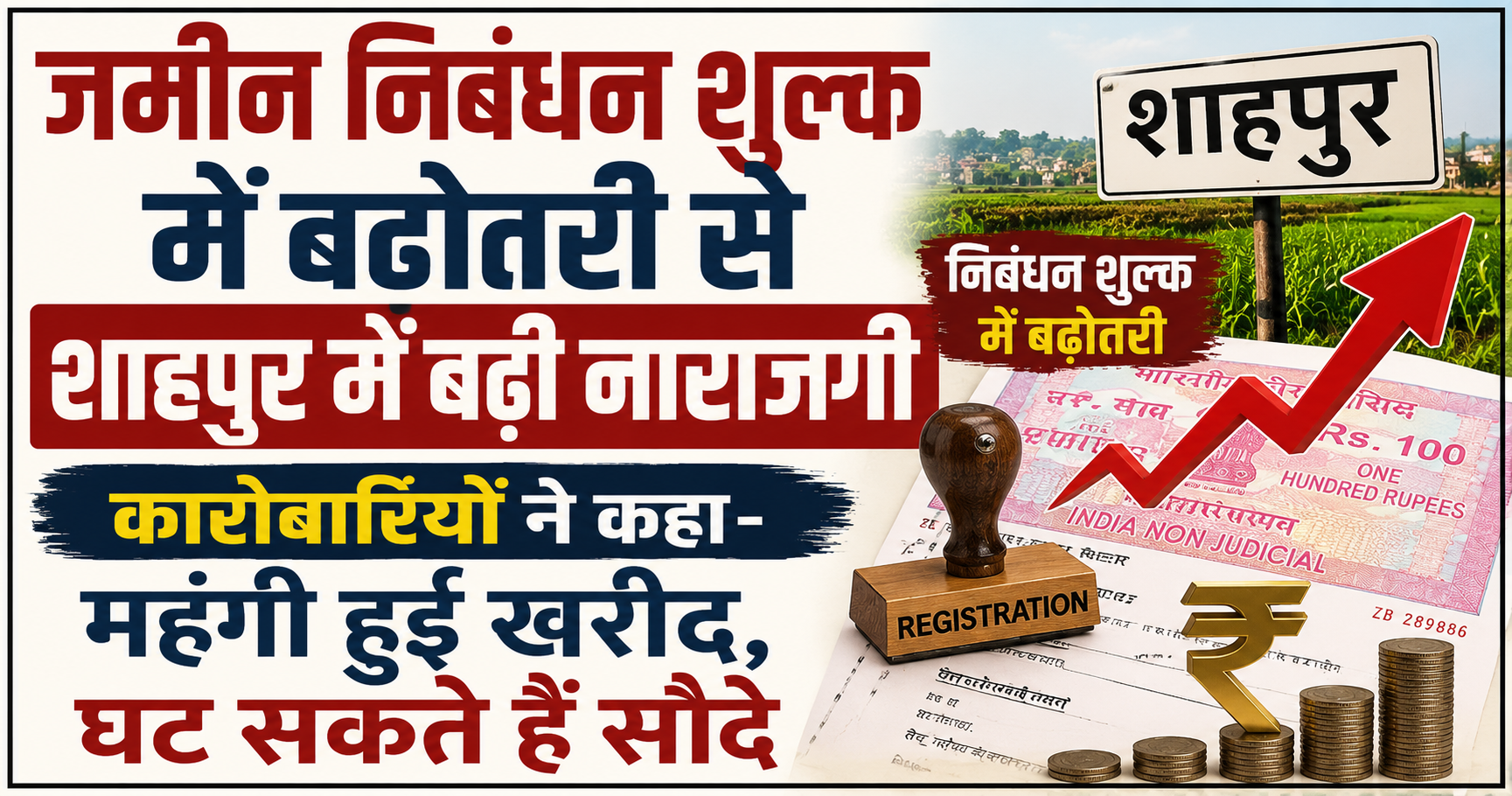
Hike in Land Registration Charges Triggers Discontent in Shahpur, Property Dealers Fear Decline in Transactions
Ara/Shahpur: The recent increase in land registration (property registration) charges by the Bihar government has sparked dissatisfaction among people associated with the real estate sector in Shahpur and nearby areas of Bhojpur district. Property dealers say the revised rates have made purchasing land significantly more expensive, raising concerns that the higher costs could slow down property transactions.
Local real estate agents, deed writers, and prospective buyers believe the increased registration charges will place an additional financial burden on the public. They argue that if registration costs remain high, many people may postpone or reconsider buying property, potentially affecting both the real estate market and government revenue in the long run.
Higher Registration Charges Increase the Cost of Buying Property
According to property dealers in Shahpur, the revised registration charges have substantially increased the overall cost of purchasing land and registering property.
Earlier, buyers mainly considered the land price and routine expenses while planning a purchase. Now, with higher registration charges, the total cost of acquiring property has risen significantly.
Dealers believe the additional financial burden will have the greatest impact on middle-class and lower-income families, many of whom save for years to purchase a piece of land.
Property Transactions May Slow Down
People associated with the real estate business say many potential buyers are delaying their purchasing decisions because of the increased registration costs.
They argue that whenever the overall cost of buying property rises, the number of transactions naturally declines. If the current situation continues for an extended period, it could slow the pace of land sales and affect the local real estate market.
Concerns Over Government Revenue
Although the government has revised the registration charges with the objective of increasing revenue, property dealers believe the move could have the opposite effect if property transactions decrease.
They argue that fewer property registrations could ultimately reduce the expected revenue collection. According to them, registration fees should be structured in a way that keeps property purchases affordable while ensuring steady government revenue.
Prospective Buyers Express Concern
The revised fee structure has also become a matter of concern for people planning to buy land.
Several prospective buyers said that land prices have already been rising steadily, and the increase in registration charges has added another financial burden. Some buyers admitted they may now have to revise their budgets or postpone their purchase plans.
Impact on Deed Writers and Property Agents
Document writers and property agents in Shahpur also fear that a decline in property transactions could directly affect their livelihoods.
They pointed out that fewer registrations would reduce work opportunities for thousands of people connected with the real estate sector. Many have urged the government to review the revised fee structure.
Traders Seek Reconsideration of the Decision
Local property dealers have appealed to the state government to reconsider the increase in registration charges.
They believe that balanced registration fees would encourage more people to register property legally, benefiting both citizens and the government's long-term revenue collection.
According to them, government policy should strike a balance between public affordability and revenue generation.
Experts Share Their Views
Real estate experts say that any increase in transaction-related costs is likely to influence market activity.
They believe property transactions may slow initially as buyers adjust to the revised charges. However, if the market adapts over time, transaction levels could eventually stabilize.
Experts also suggest that the government should continue monitoring market conditions and make policy adjustments if necessary.
Government's Objective Is to Strengthen Revenue
The government has reportedly revised the registration charges to improve revenue collection and streamline the property registration system.
However, reactions at the local level remain mixed, with many stakeholders arguing that maintaining an active property market is just as important as increasing revenue.
Need for Greater Public Awareness
Property dealers have also emphasized the need to provide clear and transparent information about the revised registration charges.
They believe that if buyers fully understand the new fee structure and registration rules, they will be able to make better-informed decisions and avoid unnecessary confusion during property transactions.
The Bihar government's decision to increase land registration charges has generated considerable dissatisfaction among property dealers, deed writers, and prospective buyers in Shahpur and surrounding areas. They argue that the revised rates have made purchasing property more expensive and could reduce the number of land transactions, potentially affecting both the local real estate market and government revenue. Property dealers have urged the government to reconsider the revised fee structure, while the long-term impact of the policy on the property market will become clearer in the coming months.


