

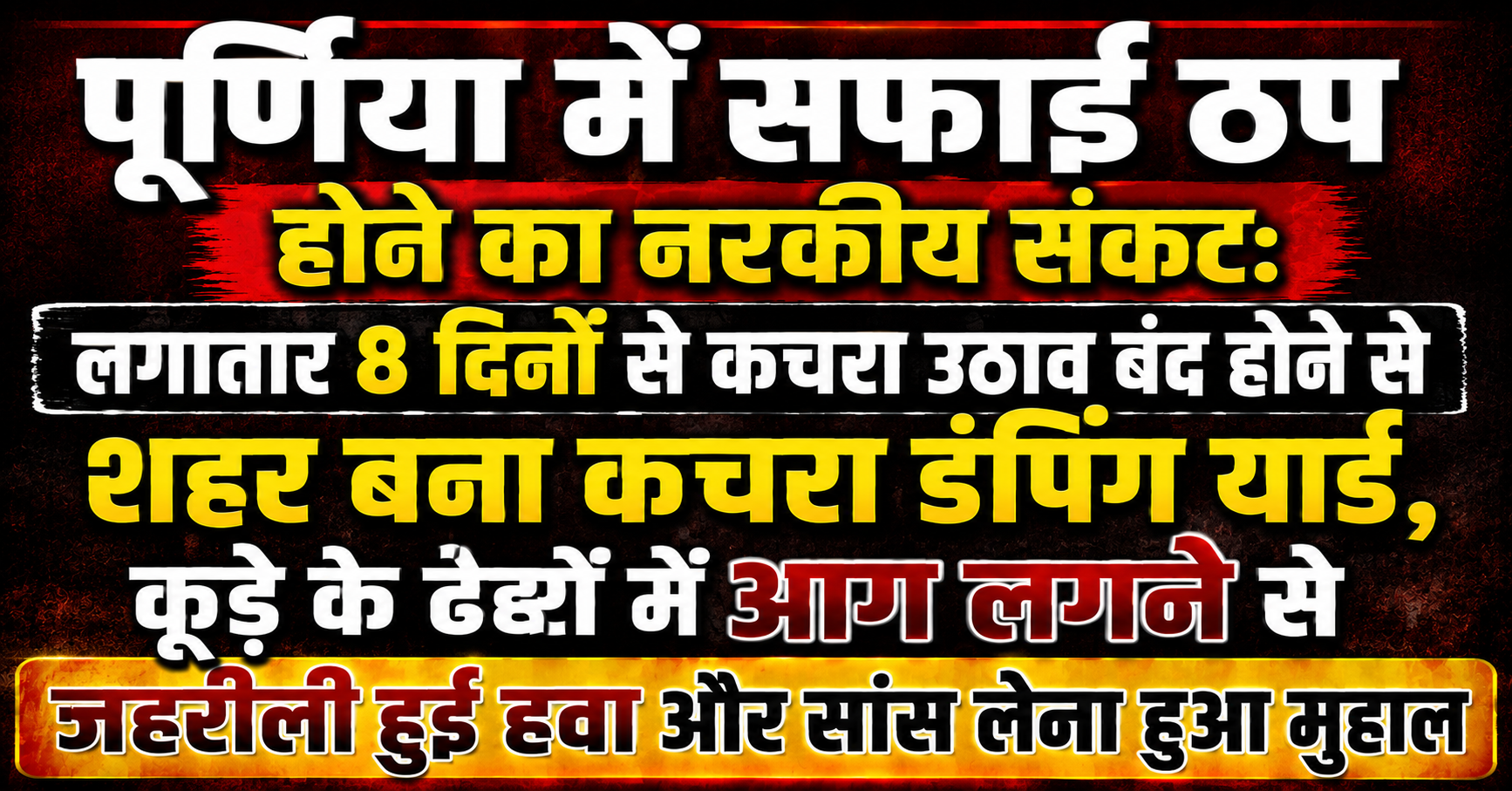
Hellish Crisis of Paralysed Sanitation in Purnia: City Turned Into Garbage Dumping Yard Due to Suspended Waste Collection for 8 Consecutive Days
Purnia: Extremely serious, shocking, and public health-threatening news has emerged from Purnia, one of the largest and most rapidly developing prominent cities in Bihar's Seemanchal region. Sanitation work in Purnia city has remained completely paralyzed for 8 consecutive days, turning the entire city into a massive garbage dumping yard. Huge mountains of refuse have piled up in every lane, intersection, main road, and nook of the neighborhoods. The situation grew even more perilous and explosive when these massive waste mounds caught intense fires—either due to anti-social elements or spontaneous chemical reactions—filling the city's air with toxic smoke and gases and rendering it severely polluted and poisonous. Grasping the gravity of the situation and witnessing mounting citizen outrage, top district administration and municipal corporation officials were forced to take to the streets at midnight.
Background of the Crisis: Why and How Did Purnia's Situation Deteriorate?
This state of urban sanitation in Purnia did not happen overnight; rather, it was primarily driven by administrative negligence, a lack of coordination between agencies, and the municipal corporation.
Sanitation System Paralyzed for 8 Days: For over a week, waste collection vehicles have not made rounds, and sanitation workers have completely halted work due to strikes or other reasons. Owing to the apathy of the municipal administration, household garbage began being dumped directly onto the streets.
Empire of Filth Everywhere: Heaps of garbage accumulated even in busy areas such as Jhanda Chowk, RN Sah Chowk, Line Bazaar, Kutchery Road, and Purnia East. The stench emanating from rotting waste and the surge of flies and mosquitoes made life miserable for local shopkeepers and residents.
The Havoc of Fires in Garbage Mounds and Toxic Air
When garbage goes uncollected for prolonged periods, methane gas and other flammable elements begin to accumulate. This exact scientific cause and human negligence triggered a massive crisis in Purnia.
Blanket of Toxic Smoke: Fires suddenly broke out in garbage heaps scattered across several prominent locations in the city. Lacking prompt firefighting resources, the flames quickly escalated into a ferocious blaze. The toxic smoke released from burning plastics, polybags, and rotting waste engulfed the entire sky.
Severe Breathing Difficulties: Air quality plummeted so drastically that breathing became arduous for children, the elderly, and asthma patients. People began rushing to hospitals complaining of eye irritation and throat infections. Citizens expressed immense outrage over why the administration failed to take timely, concrete steps to avert this disaster.
Officials Hit the Streets at Midnight: Assessing the Situation and Issuing Directives
Witnessing the sheer scale of the disaster and the widespread public anger spanning social media and the ground, panic rippled through Purnia's administrative machinery.
Midnight Inspection: The Municipal Commissioner, a special administrative team appointed by the District Magistrate, and other senior officers personally hit the streets late at night. They toured various neighborhoods to inspect the fires raging within garbage mounds and evaluate the urgency of the crisis.
Deployment of Fire Tenders: Officials immediately dispatched fire tenders to the sites and initiated war-footing operations to extinguish the smoldering fires in the waste heaps. Furthermore, strict directives were issued to deploy alternative vehicles and an additional force of sanitation workers to clear garbage from main roads before morning.
Administrative Accountability and Future Action Plan
Following this high-voltage drama, the administration attempted to reassure city residents that the situation would soon be brought under control.
Signals of Action Against Culprits: Initial probes revealed a major lapse on the part of agencies and supervisory officers showing negligence in sanitation work. The administration clarified that strict departmental and legal action will be taken against anyone found guilty of this grave negligence.
War-Footing Sanitation Drive: The administration announced that garbage will be lifted on a war footing from every corner of the city within the next 24 to 48 hours and transported to out-of-city disposal sites to bring relief to the public.
The paralysis of sanitation in Purnia for 8 days, the toxic air resulting from fires in garbage mounds, and the compulsion of officials to hit the streets at midnight lay bare the failure of urban management. This situation is not merely an administrative failure, but a grave assault on public health. If the administration fails to enact permanent and stringent measures now, Purnia residents could face a major health catastrophe.