
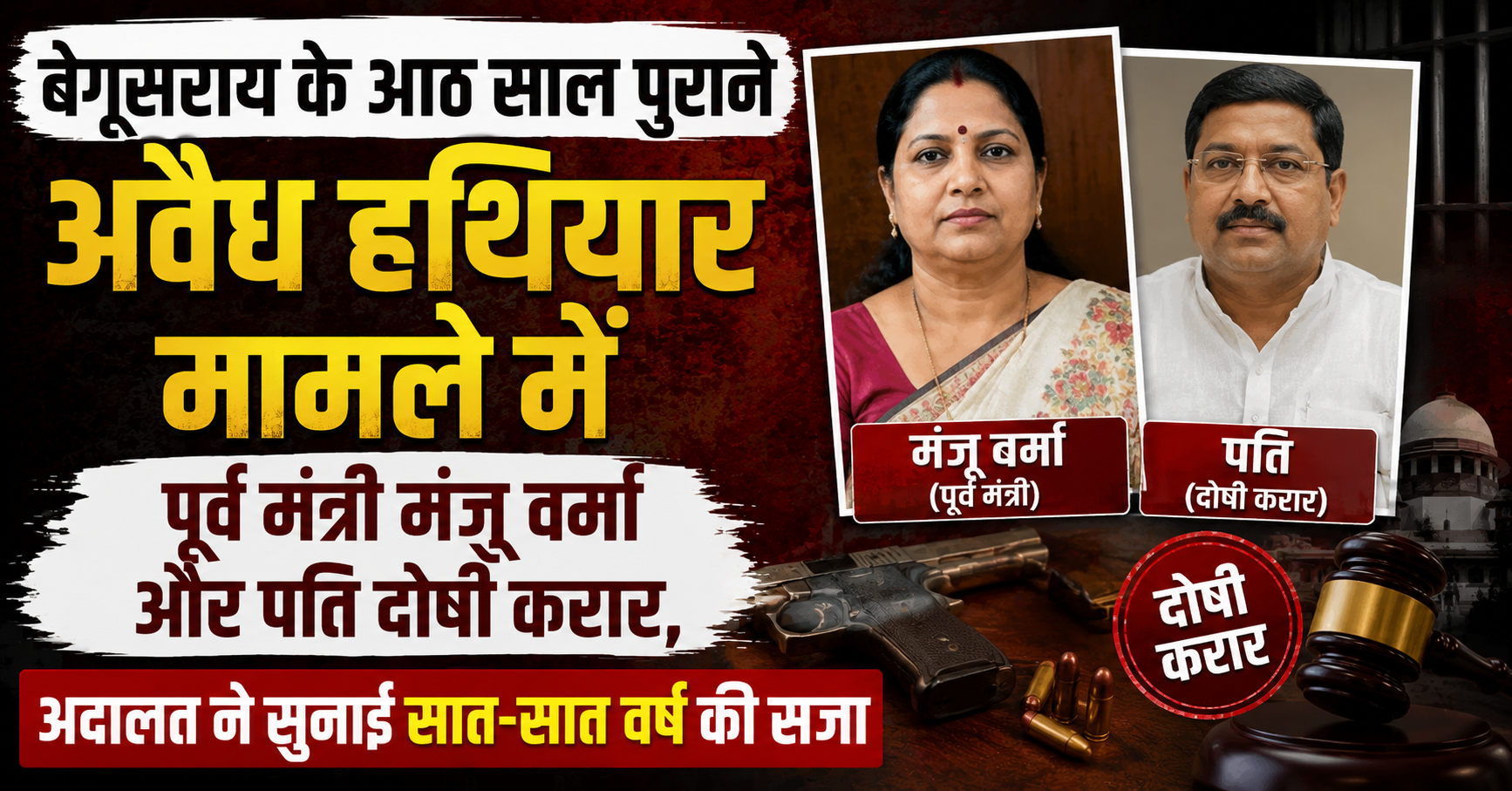
Former Bihar Minister Manju Verma and Husband Sentenced to Seven Years in Eight-Year-Old Illegal Arms Case
Begusarai: In a significant judgment in an eight-year-old illegal arms case from Bihar's Begusarai district, a court has convicted former Social Welfare Minister Manju Verma and her husband Chandrashekhar Verma. The court sentenced both of them to seven years of imprisonment and imposed a fine of ₹50,000 each. Following the pronouncement of the verdict, both were taken into judicial custody and sent to jail.
The case has remained one of the most discussed legal matters in Bihar over the past several years. After an extensive judicial process, the court delivered its verdict based on the evidence presented and the applicable provisions of law. The judgment has once again drawn attention in legal and political circles.
Court Delivers Verdict in Eight-Year-Old Case
The case dates back nearly eight years, when an illegal arms case was registered and investigated by law enforcement agencies. After completing the investigation, the authorities filed a chargesheet, and the matter proceeded to trial before the court.
During the lengthy proceedings, both the prosecution and the defense presented their arguments. After examining the evidence, witness testimonies, and legal submissions, the court delivered its judgment.
Seven-Year Prison Sentence for Both Convicts
The court found Manju Verma and Chandrashekhar Verma guilty in the case and sentenced each of them to seven years of rigorous imprisonment.
In addition to the prison term, the court imposed a fine of ₹50,000 on each of the convicts. The judgment stated that the sentence was awarded after the charges were proved in accordance with the law.
Immediately after the verdict was announced, both were taken into judicial custody and lodged in jail.
Why the Case Drew Public Attention
The illegal arms case attracted widespread public and political attention from the beginning because it involved a former state minister and her family.
Throughout the investigation and trial, the matter remained under close observation, with authorities examining various documents, evidence, and legal aspects before the case reached its conclusion.
Verdict After a Lengthy Judicial Process
The judgment came after several years of legal proceedings. During the trial, the court carefully examined documentary evidence, witness statements, and other materials submitted before it.
Legal experts note that criminal court verdicts are based on the evidence presented during the trial and the relevant provisions of law.
Political Reactions Expected
The verdict is expected to generate political reactions across Bihar.
While the court has pronounced its judgment, the legal process may continue if the convicted individuals decide to challenge the verdict before a higher court, as permitted under the law.
Equality Before the Law
Legal experts emphasize that one of the fundamental principles of the justice system is that all citizens are equal before the law.
Regardless of a person's political position, social status, or public office, courts decide cases solely on the basis of evidence and legal provisions.
Role of Investigating Agencies
The investigating agencies played a key role in collecting evidence, preparing the case, and presenting the prosecution before the court.
The evidence gathered during the investigation formed an important part of the judicial proceedings and was considered by the court while delivering the verdict.
What Happens Next?
Under Indian law, individuals convicted by a trial court have the right to challenge the judgment before a higher court.
If an appeal is filed, the High Court may review the facts, evidence, and legal issues involved before passing its own decision. The final legal outcome will depend on the subsequent judicial process.
Public Response
The verdict has sparked widespread discussion among local residents and legal observers.
Many people have described the judgment as the outcome of due judicial process, while others believe the matter may continue through further legal proceedings if an appeal is filed.
Reinforcing Faith in the Judiciary
The judgment once again highlights that criminal cases are ultimately decided through the judicial process.
The court reached its conclusion after considering the available evidence, witness testimonies, and legal provisions, reinforcing confidence in the independence and fairness of the judicial system.
The conviction of former Bihar Social Welfare Minister Manju Verma and her husband Chandrashekhar Verma in the eight-year-old illegal arms case marks an important legal development. Both have been sentenced to seven years of imprisonment and fined ₹50,000 each, following which they were sent to jail. However, the legal process does not necessarily end with the trial court's verdict, and the convicted individuals retain the right to appeal before a higher court. The final legal position will depend on the outcome of any subsequent judicial proceedings.


