
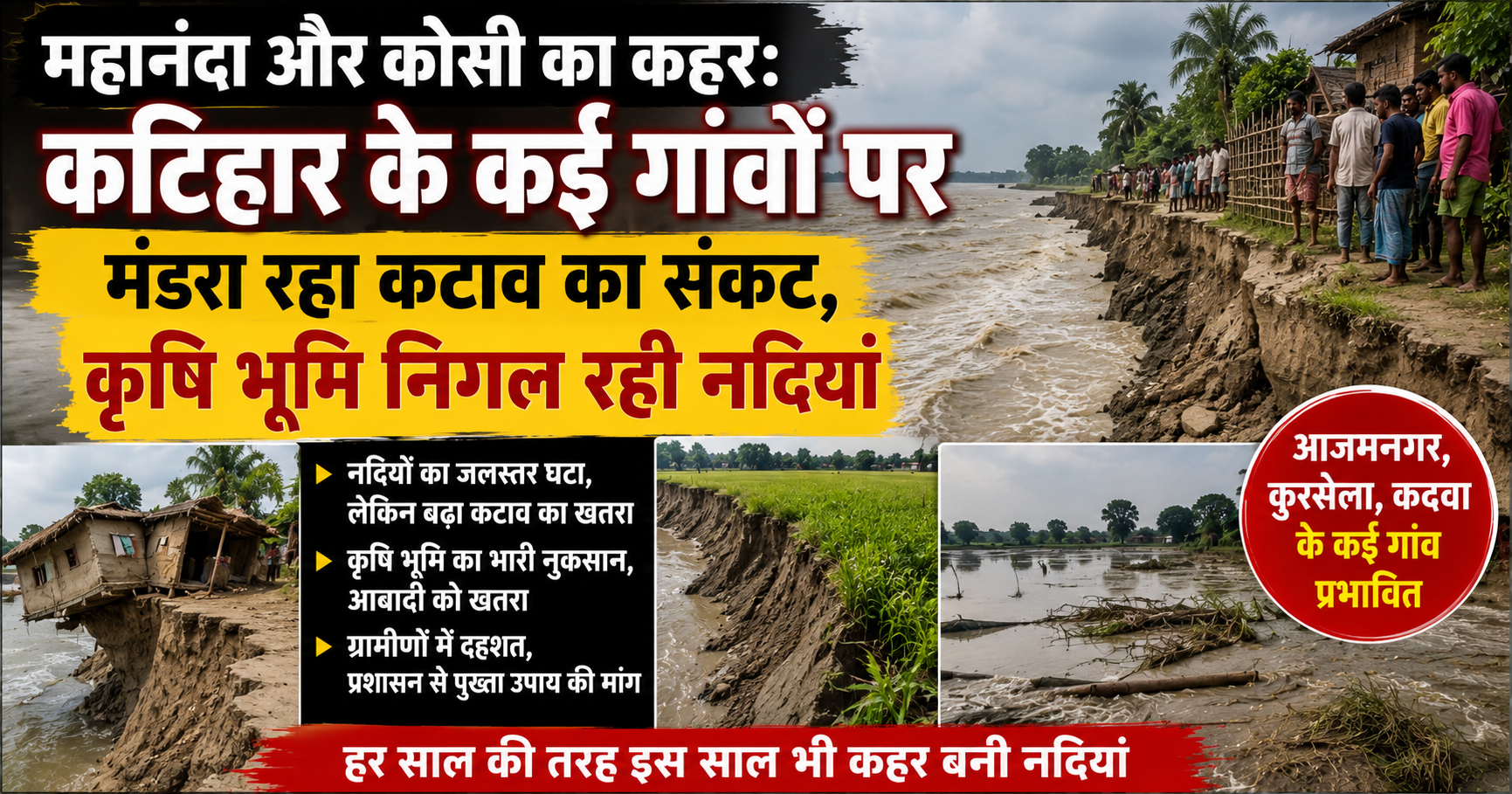
Erosion Threat Deepens in Katihar as Mahananda and Kosi Rivers Eat Away Farmland and Endanger Villages
Katihar, Jagran Team: The Seemanchal region of Bihar faces the dual challenges of floods and riverbank erosion every year, but the situation in Katihar district is particularly severe. Here, whether the water levels of the Mahananda and Kosi rivers rise or fall, erosion remains a constant threat. This year is no exception. After a recent increase in river levels, the water has begun to recede gradually, but with it, the danger of erosion has intensified across several parts of the district. Villages in Azamnagar, Kadwa, Kursela, and surrounding areas are witnessing growing erosion, causing anxiety among residents.
In many parts of Katihar, the Mahananda and Kosi rivers are continuously changing their course. Residents of villages located along the riverbanks say that shifts in the river’s flow over the past few days have accelerated erosion near farmlands and settlements. Large stretches of fertile agricultural land have already been swallowed by the rivers, while several inhabited areas are now at risk.
The situation in Azamnagar block has become particularly alarming. Villagers report that the Mahananda River is steadily cutting away the riverbanks. Many farmers have already lost valuable farmland cultivated through years of hard work. Fields that were recently being prepared for paddy and other crops have now disappeared beneath the river. Farmers fear that if the erosion continues at its current pace, many more acres of land could be lost in the coming weeks.
In the Kursela region, erosion caused by the Kosi River has become a major concern. Often referred to as the “Sorrow of Bihar,” the Kosi is once again living up to its reputation. Residents of riverside villages are living under constant fear. Several families have seen the land around their homes collapse into the river and worry that they may soon be forced to abandon their homes if immediate protective measures are not taken.
The Kadwa block is also facing increasing erosion. Farmers in several villages are making efforts on their own to save their land. Some are placing sandbags along vulnerable stretches, while others are constructing temporary embankments. However, villagers say these measures are only temporary solutions and that large-scale government intervention is urgently needed.
The impact of erosion extends far beyond the loss of agricultural land. It directly affects the livelihoods of thousands of families who depend on farming for survival. Farmers say they are already struggling with floods and unpredictable weather conditions, and the loss of land due to erosion is pushing them into deeper economic hardship.
Local residents allege that although anti-erosion projects are announced every year, they often fail to deliver the desired results on the ground. Many villagers believe that timely repair of embankments and preventive measures could significantly reduce the damage. They argue that authorities should focus on preparedness rather than responding only after disasters occur.
Public representatives have also expressed concern over the worsening situation. They have urged the administration and the Water Resources Department to conduct surveys of affected areas and take immediate action. According to them, the situation could become even more serious if preventive measures are not implemented quickly.
Officials from the Water Resources Department say that vulnerable areas are being closely monitored. Teams have been instructed to inspect sensitive locations, and protective work will be initiated wherever the risk of erosion is high. However, local residents insist that inspections alone are not enough and that immediate, concrete action is necessary.
Experts explain that rapid fluctuations in river water levels often intensify erosion. As water levels recede, river currents exert greater pressure on the banks, leading to faster soil erosion. This is one of the main reasons why erosion tends to increase even when floodwaters begin to subside.
Environmental experts also point to the impact of climate change and irregular rainfall patterns on river behavior. Over the past few years, significant changes have been observed in the flow and course of rivers, directly affecting villages located along their banks. Experts believe that only a long-term, scientific approach can provide a sustainable solution to the problem.
Villagers say they are forced to fight every year to save their homes and farmlands. Many families have already been displaced by erosion in the past and now face the same threat once again. Residents are demanding relief measures, protection for affected communities, and permanent anti-erosion infrastructure.
For now, although the water levels of the Mahananda and Kosi rivers are gradually declining, the erosion crisis continues to worsen. The administration and Water Resources Department are monitoring the situation, while local residents remain deeply concerned about their future. Unless effective steps are taken promptly, many villages in Katihar district could suffer significant losses in the coming days. People in the region are now looking to the authorities for swift action and lasting solutions to this recurring crisis.


