


Doing Other Work All Year, but Setting Up Shops During Sawan for Kanwarias' Service and Livelihood
Bhagalpur/Sultanganj: During the holy month of 'Sawan', a major festival of Sanatan culture and faith, a sea of Kanwarias heading towards Deoghar and Basukinath overflows across the roads of entire Bihar and Jharkhand. From Sultanganj, nestled on the banks of the Uttar Vahini Ganges, all the way to the court of Baba Baidyanath, the color saffron and chants of "Bam-Bam Bhole" echo everywhere. However, hidden behind this spiritual jubilation is another stark reality—that of small shopkeepers and seasonal business owners who, regardless of what they do the rest of the year, balance their annual livelihood through their hard work and commerce during the two months of Sawan. Many shopkeepers even hesitate not to mortgage or sell their land or belongings just to arrange capital to sell various worship items, clothes, and Kanwar goods during this season.
A Yearlong Wait and a 'Commercial Revolution' in Sawan
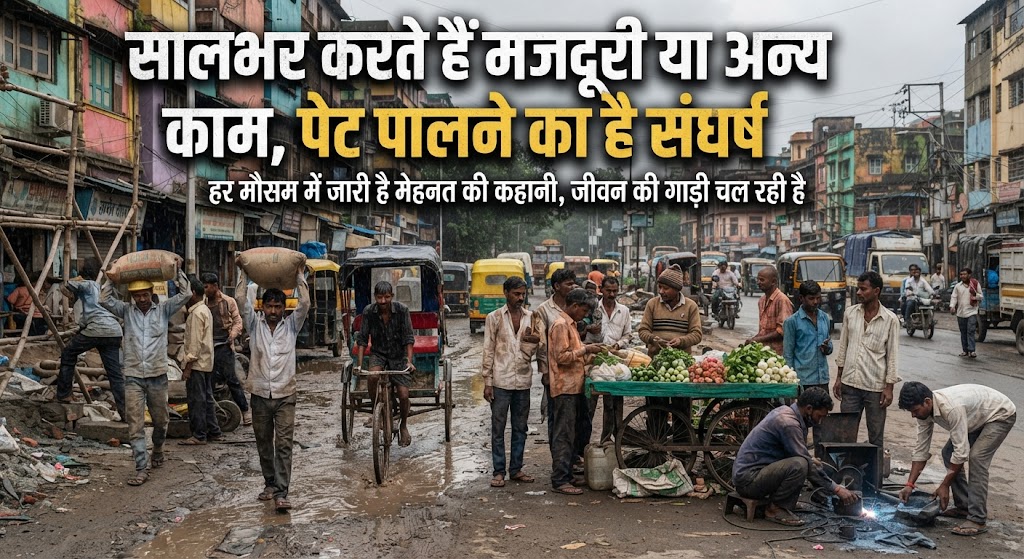
On the main routes leading to Deoghar via Bhagalpur, Sultanganj, and Banka, thousands of temporary shops spring up during the Sawan season. Most of these shopkeepers spend the remaining 10 months of the year engaged in farming, daily-wage labor, driving auto-rickshaws, or other small private jobs. But as soon as the month of Sawan approaches, their entire lifestyle shifts.
For these seasonal shopkeepers, the month of Sawan is no less than a major festival celebration. Months in advance, they plan what they will sell at their stalls—such as saffron attire, yellow robes, Kanwar poles, Rudraksha malas, incense sticks, dhoop, worship plates, and various decorative and safety items. The earnings made during these two months form the main foundation for sustaining their families, funding children's education, and covering expenses like weddings for many months ahead.
Shopkeepers Forced to Mortgage Land or Take Loans to Gather Capital
A bitter truth of this business is that setting up shops in Sawan requires heavy financial investment. Since the income of these small shopkeepers is very limited or virtually non-existent during the rest of the year, they lack sufficient cash to purchase bulk stock for Sawan.
Conversations with local shopkeepers reveal a very poignant and shocking aspect. To set up their shops and buy goods in wholesale, many poor shopkeepers are forced to take loans at high interest rates from local moneylenders. The situation reaches a point where many families mortgage or sell a small piece of land or jewelry (pawning or selling them) to moneylenders so that they can step into the Sawan market.
A seasonal shopkeeper who has been setting up stalls for Kanwarias in Sultanganj for the past 15 years, speaking on the condition of anonymity, shared, "Doing business in Sawan requires capital of at least 50,000 to 200,000 rupees. Banks don't give us loans easily, so we have to borrow money at high interest from village moneylenders or mortgage a little bit of our land. If Sawan goes well and isn't disrupted by rain or other reasons, the debt gets paid off; otherwise, we remain trapped in a debt trap all year long."
The Gamble of Weather and Risk
Doing business during the month of Sawan is a profitable venture, but it comes with equally massive risks. This entire business depends heavily on weather conditions and administrative arrangements:
Rain and Mud: If torrential rains persist throughout the month of Sawan, mud spreads across the ghats and roads, which sometimes leads to a temporary dip in the number of Kanwarias. Under such circumstances, there is a constant risk of the shopkeeper's stored goods (especially clothes and worship materials) getting ruined.
Administrative Restrictions: Often, due to traffic diversions or security reasons, pressure arises to relocate stalls from designated spots, affecting sales.
Risk of Credit: Sometimes local buyers or low-capital traders engage in credit deals among themselves, which, if not paid on time, breaks the back of small-scale shopkeepers.
Flight of Hopes Aided by Faith
Despite all the hardships, the burden of debt, and weather uncertainties, a distinct glow and hope appear on the faces of these small shopkeepers as soon as Sawan arrives. Working day and night, they wait for customers at their stalls. From early morning until late night, they forget all their fatigue in serving Kanwarias and providing necessary items.
This story is not just about a single shop or person, but the saga of thousands of hardworking families who pull the wheels of religion, faith, and livelihood together. Working as laborers or doing odd jobs all year round, when these people set up shops in Sawan, they are not just selling goods—they are weaving dreams of hope and a better future for their families. This sacred month of Sawan brings a unique confluence of economic struggle and religious faith into their lives, proving to be a ray of light that dispels the darkness of the entire year.