
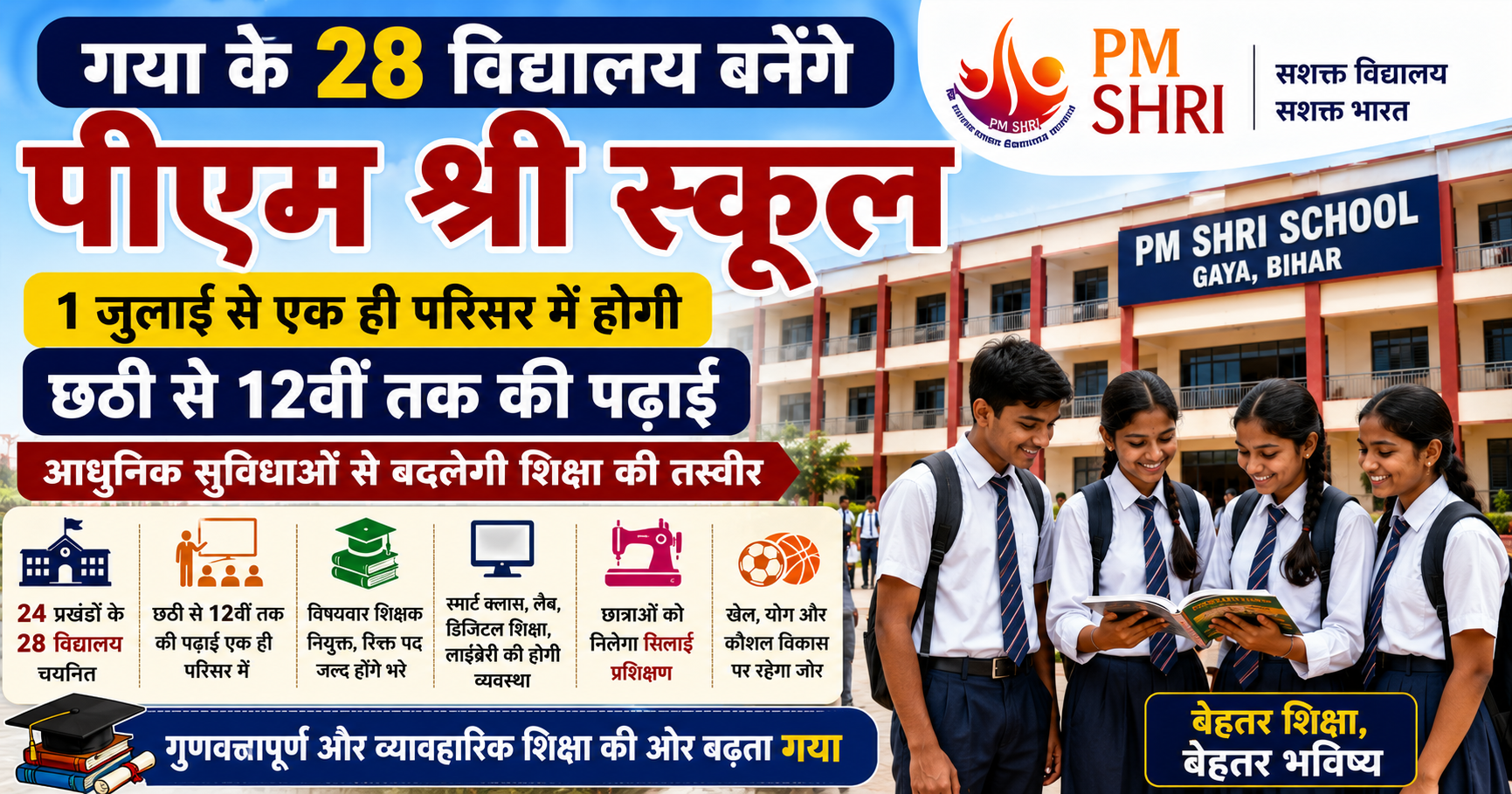
Classes 6 to 12 to Function Under One Campus from July 1
Gaya: In a major step toward transforming school education in Bihar, the Education Department has announced that 28 selected schools across 24 blocks of Gaya district will be developed as PM SHRI (Prime Minister Schools for Rising India) Schools. Beginning July 1, these institutions will offer education from Class 6 to Class 12 within a single campus, providing students with a seamless academic journey and access to modern educational facilities.
The initiative aims not only to improve the quality of school education but also to equip students with the knowledge, skills, and practical experience needed to meet the demands of the modern world. The selected schools will be upgraded with smart classrooms, advanced laboratories, digital learning resources, libraries, sports infrastructure, and skill-development programs.
28 Schools Selected Across 24 Blocks
According to the Education Department, 28 schools located in 24 administrative blocks of Gaya district have been selected under the PM SHRI initiative. These schools will be upgraded in phases to meet national standards of excellence in school education.
Students from Class 6 to Class 12 will study in the same institution, eliminating the need to shift to different schools after completing middle or secondary education. This continuity is expected to improve learning outcomes while offering greater convenience to students and parents.
Schools to Be Equipped with Modern Infrastructure
The PM SHRI schools will feature much more than conventional classrooms. The Education Department plans to equip them with modern educational infrastructure and technology to create a dynamic learning environment.
Facilities will include smart classrooms, science and computer laboratories, well-stocked libraries, digital learning tools, sports grounds, clean drinking water, upgraded sanitation facilities, accessible infrastructure for students with disabilities, and secure school campuses.
The objective is to provide students with both quality academic education and practical learning experiences.
Subject-Wise Teacher Availability
Department officials stated that subject-specific teachers have already been appointed in many of the selected schools. Vacant teaching positions in remaining subjects are expected to be filled soon.
The government aims to ensure that no student's education is affected due to a shortage of teachers and that regular classes are conducted for every subject throughout the academic session.
Strong Focus on Quality Education
The upgraded schools will emphasize more than textbook-based learning. Equal importance will be given to developing students' analytical thinking, creativity, scientific temperament, communication abilities, and problem-solving skills.
Teaching methods will become more activity-based and practical, enabling students to gain knowledge that prepares them not only for examinations but also for higher education and future careers.
Skill Development for Girls
One of the distinctive features of the PM SHRI schools will be the integration of vocational education. As part of this initiative, girls will receive stitching and tailoring training to help them acquire practical skills and become more self-reliant.
The Education Department believes that combining academic education with vocational training will open new opportunities for self-employment and entrepreneurship in the future.
Greater Emphasis on Digital Learning
Digital education will play a central role in the PM SHRI schools. Modern teaching tools such as smart boards, projectors, e-content, computers, and digital learning platforms will be introduced to make classroom instruction more interactive and effective.
This approach is expected to improve students' technological literacy and prepare them for an increasingly digital world.
Focus on Sports and Holistic Development
Apart from academics, the upgraded schools will promote sports, yoga, cultural activities, science exhibitions, music, fine arts, and other co-curricular programs.
Education experts believe that true learning extends beyond textbooks. The PM SHRI initiative therefore seeks to ensure the overall physical, intellectual, emotional, and creative development of students.
Major Benefits for Rural Students
The initiative is expected to benefit students from rural areas significantly. They will no longer have to travel to larger towns or cities in search of quality education and modern school facilities.
By providing advanced educational infrastructure closer to home, the program will also help students from economically weaker families receive equal learning opportunities.
Transforming the Education System
Education specialists believe the PM SHRI initiative could bring a major transformation to the district's education system. Modern infrastructure, qualified teachers, digital learning, and vocational education are expected to improve academic performance and overall learning outcomes.
Successful implementation of the program may also strengthen public confidence in government schools and reduce dependence on private educational institutions.
New Academic Session Begins on July 1
The Education Department has accelerated preparations to begin the new academic arrangement from July 1. Necessary infrastructure upgrades, teacher deployment, and academic planning are being completed before the commencement of classes.
Officials have assured that students' education will not be disrupted and that regular teaching for all subjects will be ensured from the beginning of the academic session.
A New Era for School Education
The decision to develop 28 schools in Gaya district as PM SHRI Schools is being regarded as a landmark initiative in strengthening Bihar's government education system. By combining quality teaching, modern infrastructure, digital technology, vocational training, and well-qualified teachers, these institutions are expected to emerge as model schools in the coming years.
If implemented successfully, the project will not only improve academic results but also nurture confident, skilled, and future-ready students capable of contributing meaningfully to the nation's development.


