
Challenges and Achievements' Held at Tilka Manjhi Bhagalpur University; Experts State This Policy is the Foundation of a Developed India
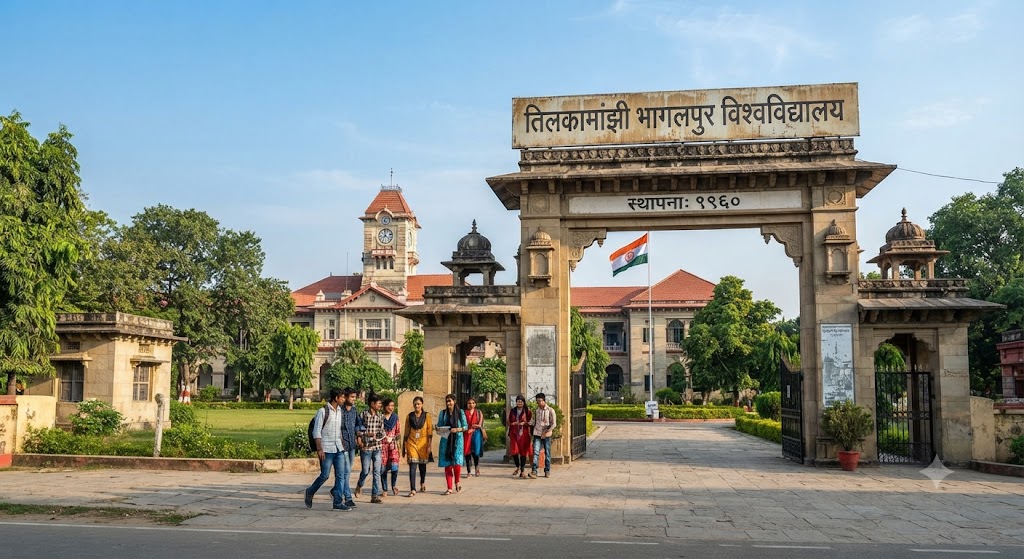
Bhagalpur (Correspondent): A highly significant seminar for the academic community was organized on Thursday within the premises of Tilka Manjhi Bhagalpur University (TMBU). Held on the theme '6 Years of National Education Policy-2020: Challenges and Achievements', the seminar witnessed educationists, researchers, and students discussing the implementation, success, and future trajectory of the policy in detail. The primary highlight of the program was viewing the education policy in alignment with the resolution of a 'Developed India'.
New Education Policy is the Basis of a Developed India
Commencing the program, Head of Department Dr. Amit Ranjan Singh stated that the National Education Policy-2020 is not merely a government document, but a vision determining the country's future direction. Emphasizing in his address, he noted:
Radical Transformation in Education: Dr. Singh stressed that this policy has shifted focus away from a rote-learning system toward skill-based education. The policy emphasizes transforming students from job seekers into job creators.
Cornerstone of a Developed India: He clarified that until education becomes inclusive and modern, realizing the dream of a 'Developed India' remains impossible. The New Education Policy bridges precisely this gap.
Address by the Keynote Speaker: Ledger of Achievements and Challenges
The keynote speaker of the seminar, eminent educationist Prof. Dr. [Name], presented a factual analysis of the journey over the past six years:
Achievements: Prof. Dr. [Name] shared that structural changes spanning higher education to primary education have materialized over the past six years. The Multiple Entry and Exit System, establishment of a Credit Bank, and introduction of education in the mother tongue stand out as the policy's greatest achievements.
Challenges: The speaker also acknowledged that implementing such massive reforms entails certain practical challenges, such as shortages in digital infrastructure, teacher training, and a lack of resources in rural regions. He noted that collective effort is imperative to confront these challenges.
Technical Session and Research Paper Presentations
Various researchers presented their papers during the technical session conducted within the seminar:
Indian Education at the Global Level: Researchers discussed how this policy renders Indian education globally competitive.
Youth Participation: Students participating in the program expressed their views that the inclusion of vocational courses has vastly broadened their career options.
Deliberations by Educationists
Other scholars participating in the program also shared their thoughts:
Holistic Development: Experts stated that the core objective of this policy is not merely conferring degrees, but ensuring the holistic development of students. Integrating sports, arts, and value-based education into the mainstream constitutes its greatest attribute.
Optimal Utilization of Resources: Speakers suggested that universities must render their resources more flexible to translate the goals of the New Education Policy onto the ground.
At the conclusion of the program, administrative officials and faculty members of Tilka Manjhi Bhagalpur University concurred that the successful implementation of the National Education Policy-2020 holds the key to transforming the nation's destiny.
It was concluded at the end of the seminar that:
Need for Continuous Dialogue: Organizing such seminars periodically is essential to render the education policy even more effective.
Emphasis on Implementation: The time has arrived to move past paperwork plans and witness tangible outcomes on the ground, for which active participation by teachers and students is indispensable.
The program was anchored by other senior professors of the department, while a large number of researchers and undergraduate/postgraduate students marked their presence to make the event a success. The seminar concluded with a vote of thanks, paving the way for unlocking new horizons in education for the times ahead.


