
Here's the English translation of the news article:
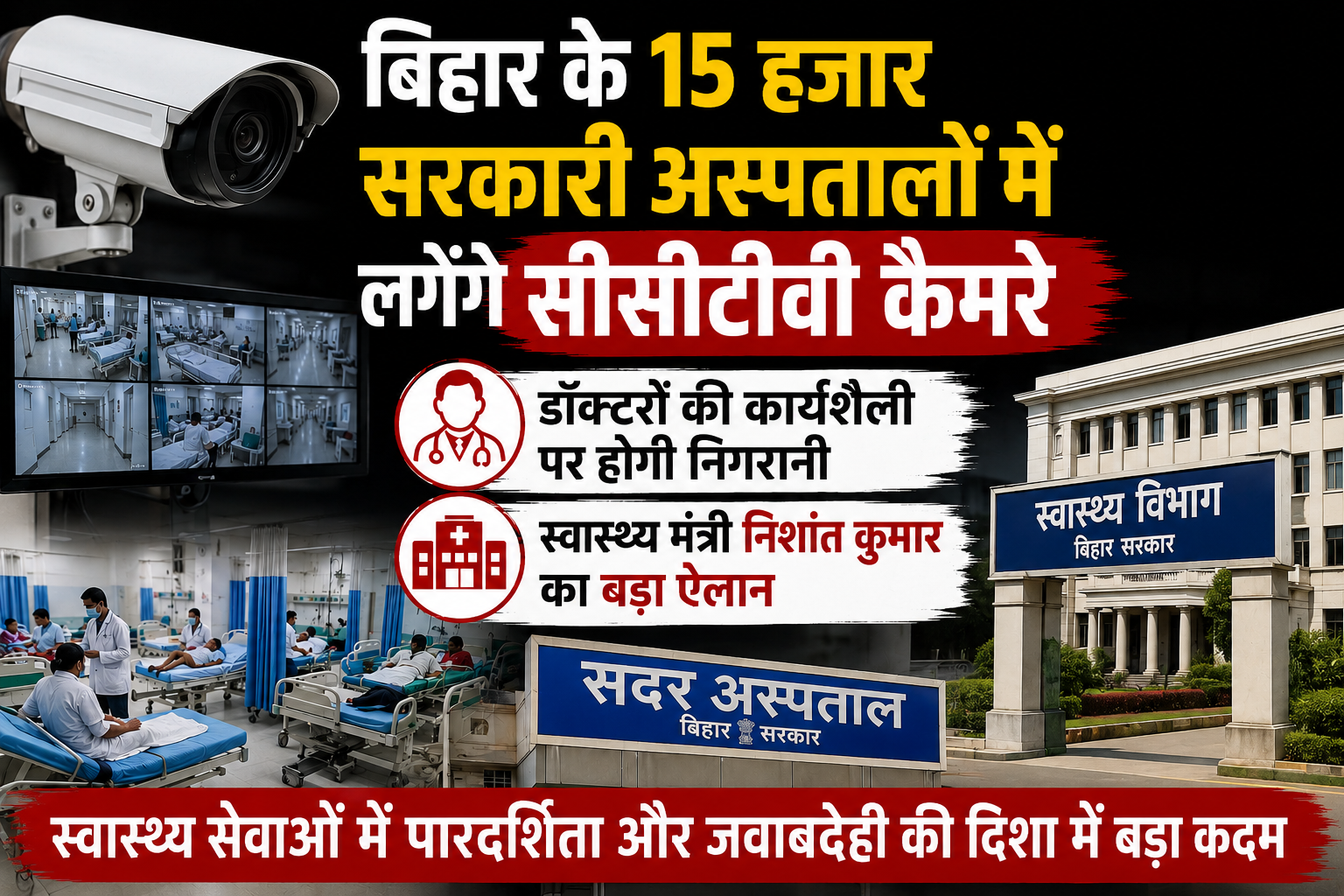
CCTV Cameras to Be Installed in 15,000 Government Hospitals Across Bihar; Doctors' Work Performance to Be Monitored, Says Health Minister Nishant Kumar
Patna: The Bihar government has announced a major initiative aimed at making the state's healthcare system more transparent, accountable, and patient-friendly. Health Minister Nishant Kumar stated that approximately 15,000 government hospitals and healthcare institutions across Bihar will be equipped with CCTV cameras in a phased manner. The surveillance system will be used to monitor the work performance of doctors, healthcare staff, and other employees. The minister also said that he would personally oversee the monitoring process to ensure that patients receive timely and quality medical services.
The announcement comes amid frequent complaints regarding doctors' absenteeism, delayed treatment, poor patient care, and administrative negligence in government hospitals. According to the government, the use of modern surveillance technology will help improve accountability and the overall quality of healthcare services.
Initiative to Improve Transparency in Healthcare
Health Minister Nishant Kumar emphasized that the purpose of installing CCTV cameras is not to create unnecessary pressure on healthcare workers but to make government hospitals more responsible, transparent, and efficient.
He said that every patient visiting a government hospital deserves respectful treatment and quality healthcare. The surveillance system will help authorities ensure that doctors and healthcare workers are performing their duties according to official schedules.
If negligence or irregularities are detected at any hospital, the concerned officials will be asked to explain, and appropriate administrative action will be taken.
Around 15,000 Healthcare Institutions to Be Covered
According to the minister, the project will cover Primary Health Centres (PHCs), Additional Primary Health Centres (APHCs), Community Health Centres (CHCs), referral hospitals, sub-divisional hospitals, district hospitals, and other government healthcare facilities across Bihar.
The initiative will be implemented in both urban and rural areas to ensure that citizens throughout the state receive improved healthcare services.
Doctors' Performance Will Be Monitored
The Health Minister noted that complaints are often received regarding doctors arriving late, remaining absent without valid reasons, or failing to provide proper care to patients. CCTV surveillance is expected to help reduce such issues by increasing accountability.
He clarified that the objective is not merely to enforce discipline but also to ensure that patients receive medical treatment without unnecessary delays or inconvenience.
Minister to Personally Monitor the System
Nishant Kumar said he would personally supervise the implementation and monitoring of the CCTV surveillance system. He has directed officials to regularly review the footage and identify hospitals where improvements are needed.
Hospitals found repeatedly violating standards or displaying negligence will face appropriate administrative action against the responsible officials and staff.
Patients Expected to Benefit
The government believes that installing CCTV cameras will improve discipline in hospitals, ensure the timely availability of doctors, increase staff accountability, and reduce complaints from patients.
Healthcare experts believe that technology-based monitoring can significantly improve the quality of public healthcare services if implemented effectively.
Stronger Hospital Security
Besides monitoring staff performance, CCTV cameras are also expected to strengthen security in government hospitals. They can help prevent theft, vandalism, violence, and other unwanted incidents.
Recorded footage may also prove valuable during investigations and administrative inquiries whenever disputes or emergencies arise.
Phased Implementation Planned
According to official sources, the Health Department plans to implement the project in phases. Initially, CCTV cameras will be installed in major hospitals and healthcare facilities that handle a large number of patients, followed by smaller institutions.
Authorities are also preparing a comprehensive plan covering camera quality, data storage, network connectivity, and centralized monitoring systems.
Experts Call for Broader Healthcare Reforms
Healthcare experts welcomed the move but stressed that surveillance alone cannot solve all problems. They emphasized the need to ensure adequate numbers of doctors, sufficient medicine supplies, modern medical equipment, and better hospital infrastructure.
According to experts, meaningful improvements in healthcare require both accountability and stronger foundational facilities.
Mixed Public Response
The government's announcement has received mixed reactions from the public. Many people have welcomed the decision, saying it could improve discipline and transparency in government hospitals.
Others argued that alongside CCTV surveillance, the government should also focus on increasing the number of doctors, ensuring the regular availability of medicines, expanding diagnostic services, and improving basic facilities for patients.
The Bihar government's decision to install CCTV cameras in nearly 15,000 government hospitals is being viewed as a significant step toward improving accountability and transparency in the state's public healthcare system. Health Minister Nishant Kumar has stated that doctors' and healthcare workers' performance will be monitored closely and that he will personally oversee the surveillance system. If implemented effectively alongside improvements in healthcare infrastructure, staffing, and medical resources, the initiative could substantially enhance the quality of government healthcare services and benefit millions of patients across Bihar.


