
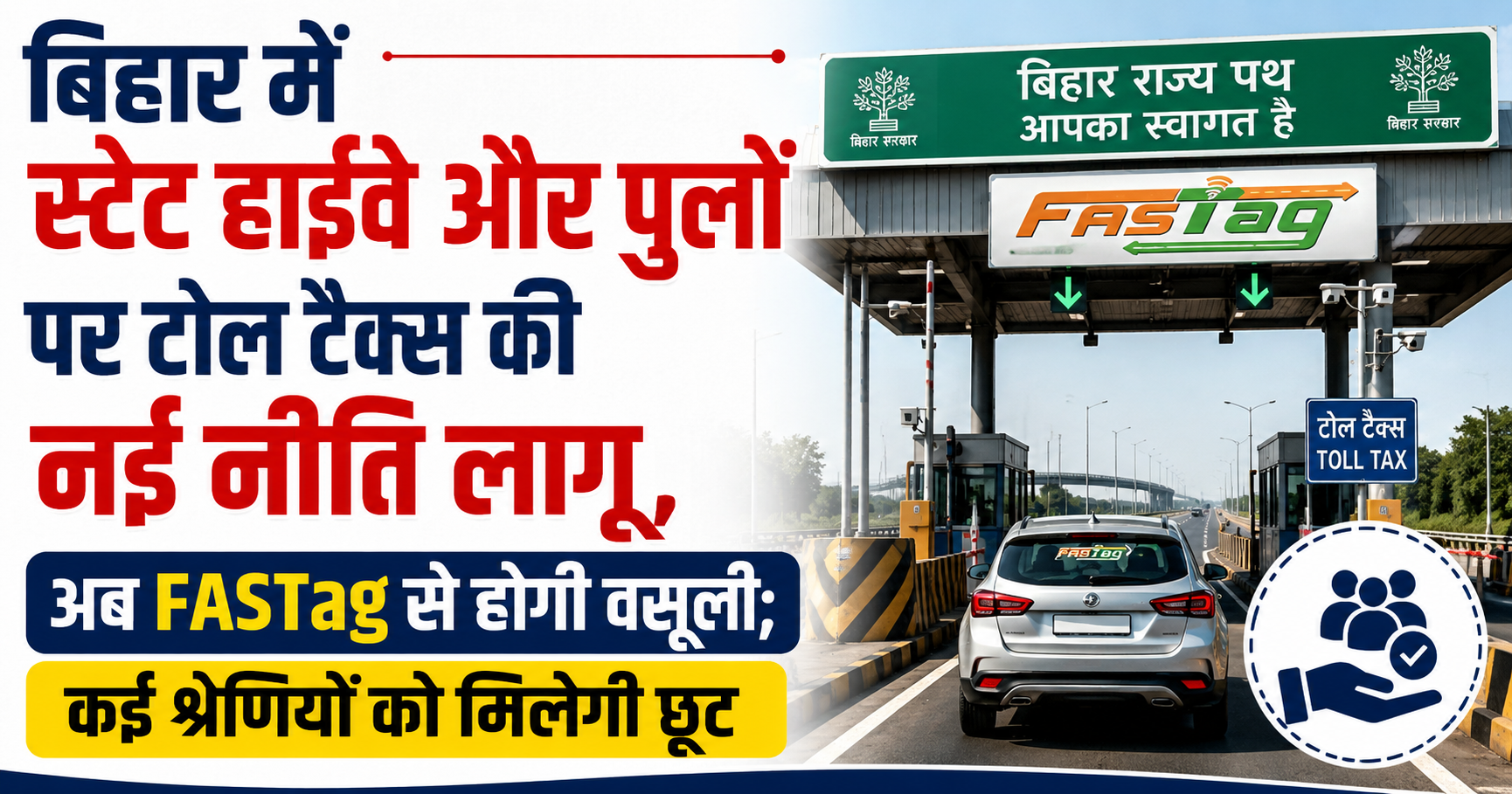
Bihar Introduces New Toll Policy for State Highways and Bridges; FASTag Mandatory for Electronic Toll Collection
Patna: The Bihar government has introduced a new toll collection policy for state highways and selected state-owned bridges, marking a significant step toward strengthening the state's road infrastructure. Under the Road User Fee (Assessment and Collection Rate) Rules, 2026, toll charges will now be collected exclusively through FASTag or other government-approved electronic payment systems. The policy also includes exemptions for specific categories of vehicles. The initiative aims to reduce congestion at toll plazas, improve transparency in toll collection, and create a sustainable source of revenue for the maintenance and development of roads and bridges.
With the implementation of the new policy, Bihar joins the growing list of Indian states adopting fully digital toll collection systems. According to the government, the revenue generated through road user fees will be used for road construction, widening projects, maintenance, and the development of new infrastructure.
Toll Collection Through FASTag Only
Under the new rules, all eligible vehicles must be equipped with a valid FASTag or another approved electronic toll collection system. As vehicles pass through toll plazas, the applicable toll amount will be deducted automatically from the linked FASTag account. This will eliminate the need for cash payments and significantly reduce waiting times at toll booths.
Officials from the transport department said that electronic toll collection would ensure greater transparency, minimize revenue leakages, and speed up vehicle movement across toll plazas.
State Highways and Bridges Covered
Until now, toll collection in Bihar was primarily limited to National Highways. Under the new policy, tolls will also be levied on designated state highways and bridges developed or maintained by the Bihar government. Roads and bridges notified under the policy will be subject to road user fees based on government approval.
The government believes that high-quality roads and well-maintained bridges are essential for economic growth, and a dedicated funding mechanism is necessary for their upkeep.
Different Rates for Different Vehicles
The new policy prescribes separate toll rates for different categories of vehicles, including light motor vehicles, buses, trucks, and heavy commercial vehicles. The rates will depend on factors such as the type of vehicle, road category, bridge specifications, and the cost of the infrastructure project.
Exemptions for Specific Categories
The government has also provided exemptions for certain categories of vehicles. Emergency service vehicles, ambulances, fire brigade vehicles, police vehicles, defense forces, and other notified government vehicles are expected to be exempt from paying the road user fee. The state government may also extend exemptions to additional categories through official notifications.
Boost to Digital Payments
One of the key objectives of the new policy is to promote digital transactions. Since toll payments will be made electronically, cash handling will be minimized, making the collection process more efficient and transparent. Officials believe this will improve revenue management and reduce the scope for irregularities.
Benefits for Travelers
Experts believe that electronic toll collection will offer several advantages to commuters. Vehicles will spend less time waiting at toll plazas, resulting in smoother traffic flow, lower fuel consumption, reduced air pollution, and faster travel times. Long queues at toll booths are also expected to decrease significantly.
Accelerating Road Infrastructure Development
According to the government, revenue collected through road user fees will be reinvested in the state's transport infrastructure. The funds will support the construction of new roads, widening of existing highways, repair of bridges, and modernization of transport facilities. The policy is also expected to improve connectivity between rural and urban areas.
Transparent Monitoring System
The new policy incorporates modern digital monitoring mechanisms to ensure transparent toll collection. Every transaction will be recorded electronically, enabling real-time monitoring of revenue collection. Vehicles with insufficient FASTag balance may face action in accordance with the prescribed rules.
Government's Objective
The Bihar government stated that the state's rapidly expanding road network requires a stable financial mechanism for long-term maintenance. Instead of relying solely on budgetary allocations, the road user fee system will provide a dedicated source of funding for infrastructure development. Officials say the initiative will ultimately lead to better roads, safer bridges, and a more comfortable travel experience for the public.
What Happens Next?
Following the implementation of the new rules, the concerned departments will install electronic toll collection systems on notified state highways and bridges in a phased manner. The government will issue prior notifications for locations where toll collection will begin. Vehicle owners have been advised to keep their FASTag accounts active and adequately funded to avoid inconvenience during travel.
The new toll policy is being viewed as an important reform for Bihar's transportation infrastructure. While it is expected to provide a sustainable source of funding for road development, it will also increase travel costs for regular commuters. The effectiveness of the policy will ultimately depend on how efficiently the government balances revenue generation with the delivery of better road infrastructure and public convenience.


