
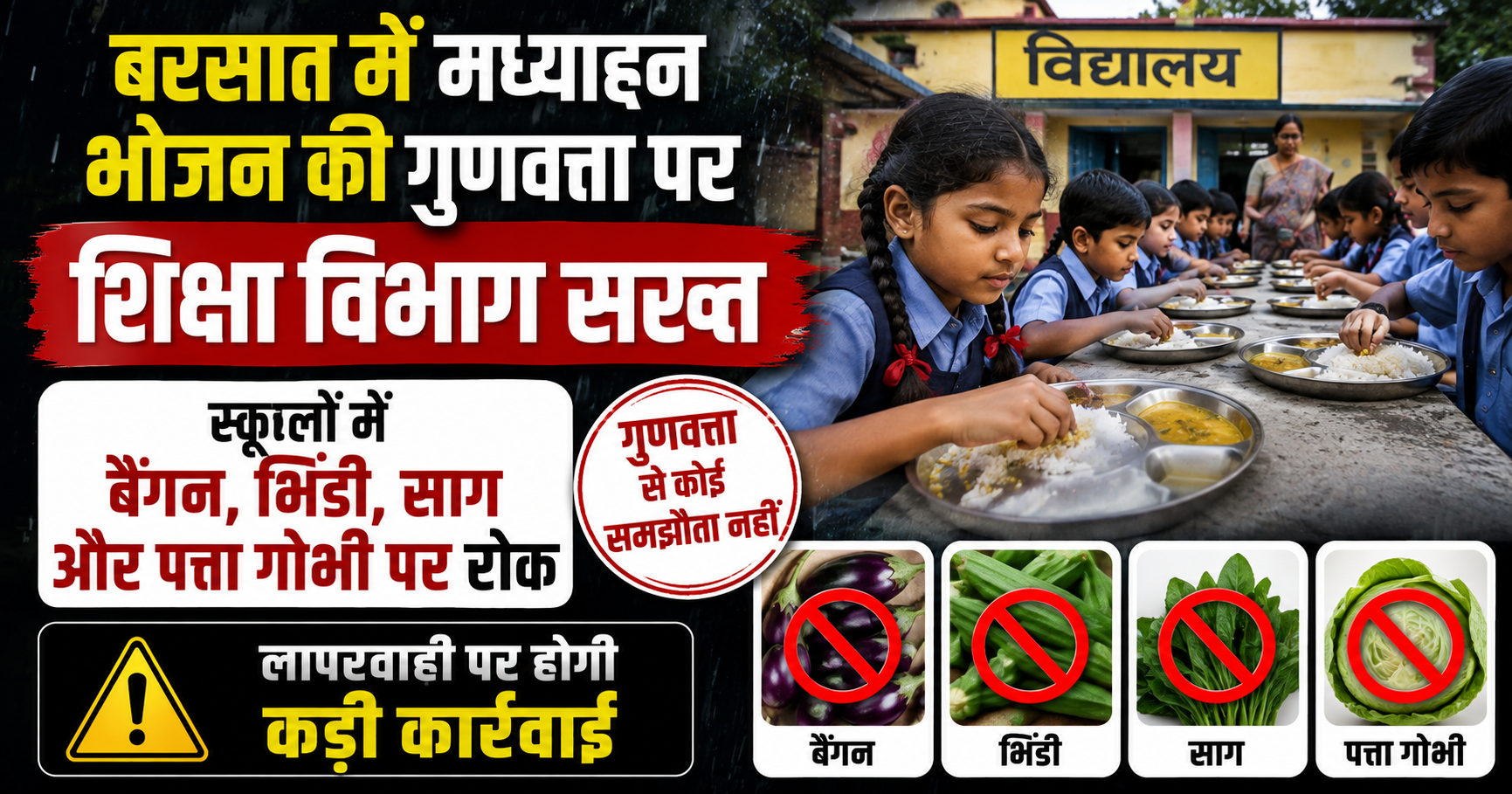
Bihar Education Department Tightens Monitoring of Mid-Day Meals During Monsoon; Brinjal, Okra, Leafy Greens, and Cabbage Banned in Schools, Strict Action for Violations
Bhagalpur/Patna: To ensure the quality and food safety of meals served under the PM POSHAN (Pradhan Mantri Poshan Shakti Nirman) Scheme, formerly known as the Mid-Day Meal Scheme, during the monsoon season, the Bihar Education Department has issued stringent guidelines to all districts across the state. The department has directed that brinjal (eggplant), okra, all varieties of leafy greens, and cabbage must not be used in meals served to students in government schools during the rainy season.
The decision has been taken in view of the increased risk of insect infestation, fungal growth, and contamination in these vegetables during the monsoon. The department's objective is to ensure that millions of schoolchildren receive only safe, hygienic, and nutritious meals.
Strict Instructions Issued to All Districts
Vinayak Mishra, Director of the Mid-Day Meal Directorate, issued an official directive on Monday to District Education Officers, concerned officials, and operators of Centralized Kitchens across Bihar.
The circular clearly states that there will be no compromise on the quality of food served under the PM POSHAN Scheme. Authorities have been instructed to regularly monitor every stage of the process—from food preparation to serving meals to students.
District- and block-level officials have also been directed to conduct periodic surprise inspections to ensure full compliance with the guidelines.
Why Have These Vegetables Been Restricted?
According to experts, the rainy season increases the likelihood of insects, fungal contamination, and microbial growth in many leafy and seasonal vegetables. If these vegetables are not thoroughly cleaned and inspected, they could pose health risks to children.
Keeping these concerns in mind, the Education Department has temporarily prohibited the use of brinjal, okra, leafy greens, and cabbage in school meals during the monsoon. Schools have been advised to use alternative vegetables that are considered safer and less prone to contamination during this period.
Greater Emphasis on Safe and Nutritious Meals
The department has instructed schools to serve only fresh, hygienic, and quality-approved food. Regular checks will be carried out on the quality of rice, pulses, cooking oil, spices, and other ingredients used in meal preparation.
The guidelines also emphasize maintaining kitchen hygiene, ensuring safe drinking water, promoting personal hygiene among cooking staff, and following proper food-serving practices.
Close Monitoring of Centralized Kitchens
In districts where meals are supplied through Centralized Kitchens, officials have been instructed to conduct regular inspections to ensure that food is prepared on time, transported safely to schools, and meets all prescribed quality standards.
If deficiencies are found at any stage, the concerned institution may be asked to provide an explanation, and contractual or administrative action may follow if necessary..
Children's Health Remains the Top Priority
The PM POSHAN Scheme is designed not only to provide meals to students but also to ensure they receive balanced and nutritious food that supports their growth and learning.
Education experts believe that maintaining high food quality is one of the most important aspects of the program's success. Safe and nutritious meals can significantly contribute to children's physical health, cognitive development, and regular school attendance.
Regular Inspections to Improve Transparency
The department's decision to mandate regular inspections is being viewed as an important step toward strengthening transparency and accountability in the implementation of the scheme.
District and block officials will monitor schools to verify food quality, cleanliness, adherence to the approved menu, and overall compliance with departmental standards.
Experts believe that continuous monitoring will reduce the likelihood of negligence and ensure that the benefits of the scheme effectively reach students.
Parents Welcome the Decision
Many parents have welcomed the Education Department's initiative, describing it as a positive step toward safeguarding children's health. They believe that regular inspections and strict action against violations will improve both food safety and the overall quality of meals served in government schools.
The decision is also expected to raise greater awareness about food hygiene and safety in educational institutions.
The Bihar Education Department has introduced comprehensive and strict guidelines to maintain the quality of meals served under the PM POSHAN Scheme during the monsoon season. The temporary ban on the use of brinjal, okra, leafy greens, and cabbage, along with mandatory inspections and stringent penalties for negligence, is being viewed as a significant measure to protect children's health and ensure food safety.
The responsibility now lies with district administrations, education officials, school managements, and meal service providers to implement these directions effectively so that every child studying in a government school receives safe, hygienic, and nutritious food throughout the monsoon season.


