
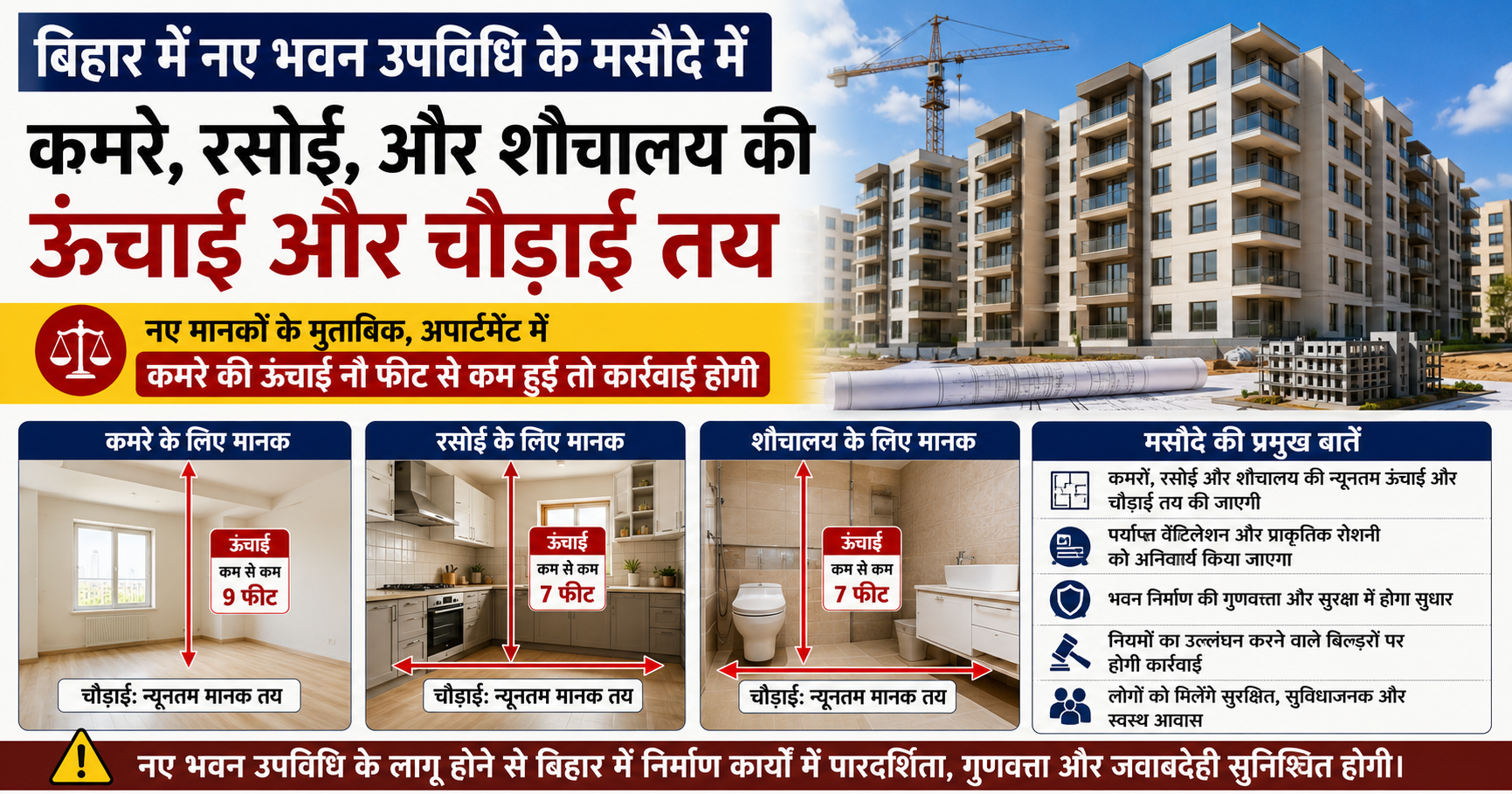
Bihar Drafts New Building Bye-Laws; Action to Be Taken if Apartment Room Height Is Below 9 Feet
Patna, Bihar: In a significant move aimed at improving construction quality and ensuring better living conditions, the Bihar government has prepared a draft of new building bye-laws. The proposed regulations set minimum standards for the height and width of rooms, kitchens, and toilets in residential and commercial buildings. According to the draft, apartment rooms must have a minimum height of nine feet, and any violation of this standard could lead to action against the concerned builder or developer.
The government believes that these new norms will enhance safety, transparency, and quality in the construction sector while providing citizens with healthier and more comfortable housing. The draft is currently under consideration and is expected to be implemented across the state after receiving final approval.
Need for New Regulations Amid Rapid Urbanization
Over the past decade, Bihar has witnessed rapid urban growth, especially in cities such as Patna, Gaya, Muzaffarpur, Bhagalpur, and Darbhanga. The increasing demand for housing has led to a boom in apartment complexes and multi-story residential projects.
However, concerns have frequently been raised about builders reducing room sizes and compromising living standards to maximize profits. In response to these issues, the state government has proposed updated building regulations to ensure that every residential unit meets minimum standards of comfort, safety, and functionality.
Experts believe that clearly defined construction standards are essential for maintaining quality housing and improving the overall quality of life for residents.
Minimum Room Height Fixed at Nine Feet
One of the key provisions in the draft bye-laws is the requirement that all rooms in apartments and residential buildings must have a minimum height of nine feet.
Government officials state that adequate ceiling height improves ventilation, allows better circulation of air, and provides more natural light. Such features contribute to a healthier indoor environment and greater comfort, particularly during hot weather.
If inspections reveal that a room's height is below the prescribed limit, authorities may initiate legal or regulatory action against the builder. Possible penalties could include fines, cancellation of approvals, or other disciplinary measures.
Special Standards for Kitchens
The draft also introduces specific standards for kitchens. The government wants every residential unit to have a properly designed kitchen with sufficient space, ventilation, and arrangements for smoke exhaust.
According to experts, kitchens play a crucial role in household health and well-being. Poorly ventilated and cramped kitchens can lead to discomfort and health problems due to smoke, heat, and inadequate airflow.
To address these concerns, the proposed regulations specify minimum dimensions and ventilation requirements for kitchen spaces.
Standards for Toilets and Bathrooms
The draft building bye-laws also focus on improving the design and usability of toilets and bathrooms.
Under the proposed rules, minimum standards for height, width, and usable space will be established. The objective is to ensure convenience, hygiene, and safety for residents.
Health experts emphasize that properly designed sanitation facilities contribute significantly to public health and overall living standards. Therefore, ensuring adequate space and proper construction in toilets has been made a priority.
Emphasis on Ventilation and Natural Light
Beyond room dimensions, the draft places strong emphasis on ventilation and access to natural light.
Buildings will be required to provide sufficient windows, openings, and ventilation systems to ensure proper airflow and sunlight. These measures are expected to create healthier living environments and reduce dependence on artificial lighting during the day.
Environmental experts note that better natural lighting and ventilation can also reduce electricity consumption and improve energy efficiency, contributing to sustainable urban development.
Increased Accountability for Builders
Once implemented, the new regulations will significantly increase the accountability of builders and developers.
Building plans will be scrutinized carefully before approval, and inspections may be conducted both during and after construction to verify compliance with the prescribed standards.
Authorities have indicated that strict action may be taken against developers who fail to follow the rules. This could include financial penalties, suspension of approvals, or other legal consequences.
The government believes that stricter monitoring will improve transparency and raise construction standards across the state.
Benefits for Homebuyers
One of the biggest advantages of the new bye-laws is that homebuyers are likely to receive safer, healthier, and better-designed homes.
Adequate room sizes, proper ventilation, and standardized sanitation facilities will improve living conditions and provide greater value to property purchasers. The regulations are also expected to increase consumer confidence in the housing market.
Experts say that these measures will help prevent substandard construction practices and ensure that buyers receive homes that meet acceptable quality benchmarks.
Positive Response from Experts and Citizens
Urban planners, architects, and housing experts have largely welcomed the proposed regulations. They argue that Bihar has long needed updated building standards to keep pace with modern urban development.
Many residents also view the draft positively, believing that it will protect the interests of homebuyers and improve the quality of residential construction.
However, some stakeholders have suggested that effective implementation and regular inspections will be essential to ensure the success of the new policy.
Awaiting Final Approval
The draft building bye-laws are currently under review. The government is expected to seek feedback and suggestions from stakeholders before finalizing the regulations.
If approved in their current form, the new rules could bring significant changes to Bihar’s construction sector, ensuring better housing quality, enhanced safety standards, and greater accountability among builders.
Overall, the proposed building bye-laws represent an important step toward planned urban development in Bihar. By establishing clear standards for room dimensions, ventilation, and sanitation facilities, the government aims to create safer, more comfortable, and modern living spaces for its citizens.


