
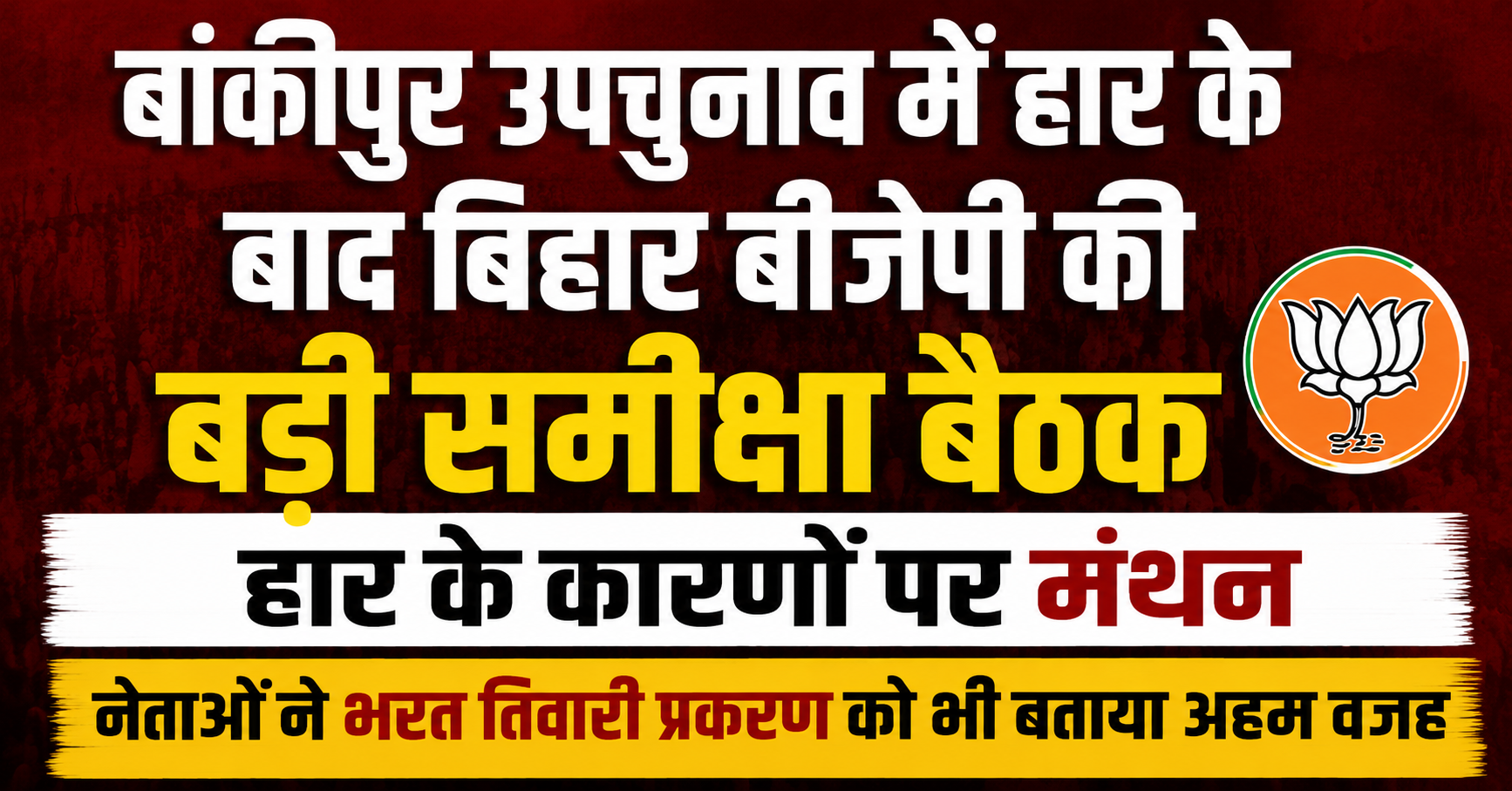
Bihar BJP Holds Key Review Meeting After Bankipur By-Election Defeat; Leaders Analyze Loss, Say Bharat Tiwari Episode Also Contributed
Patna: Following its defeat in the Bankipur Assembly by-election, the Bihar unit of the Bharatiya Janata Party (BJP) convened an important organizational review meeting to assess the election outcome. Senior party leaders, office-bearers, and members of the election management team participated in the meeting to conduct a detailed analysis of the results. The primary objective was to identify the reasons behind the defeat, evaluate organizational shortcomings, and formulate a strategy for future elections.
According to sources, several leaders expressed their views openly during the meeting and discussed the challenges faced during the election campaign. Participants also acknowledged that local issues, organizational coordination, and certain controversial developments influenced the election outcome. During the discussions, the Bharat Tiwari episode was also mentioned, with some leaders stating that it was one of the factors that negatively affected the party's electoral performance.
Detailed Analysis of the Election Results
The meeting included a booth-wise review of the voting pattern across the Bankipur Assembly constituency. Leaders examined areas where the party received fewer votes than expected, identified booths where organizational performance was weak, and analyzed constituencies where the opposition secured significant leads.
Party officials also evaluated the election campaign strategy, public outreach efforts, and the effectiveness of communicating the party's message to voters. Several leaders observed that the organization had not been equally active in all areas, which may have affected the final outcome.
Discussion on the Bharat Tiwari Episode
One of the key points discussed during the review meeting was the Bharat Tiwari episode. Several leaders reportedly stated that the controversy had an impact on the political atmosphere during the election and gave the opposition an opportunity to raise questions against the party.
At the same time, participants emphasized that no single issue should be held solely responsible for the defeat. They noted that election outcomes are generally influenced by a combination of political, organizational, and local factors.
Greater Focus Needed on Local Issues
Leaders also discussed the importance of addressing constituency-specific concerns. According to participants, voters in Bankipur were particularly focused on issues such as road infrastructure, drainage, drinking water, traffic management, employment opportunities, and civic amenities.
Some leaders suggested that future election campaigns should place greater emphasis on local development issues and tailor campaign strategies according to the specific needs of the constituency. They argued that concentrating on grassroots concerns could strengthen public trust and improve electoral performance.
Organizational Coordination Under Review
The meeting also included a review of the party's organizational functioning. Several leaders stressed the need to strengthen the organization at the booth level, improve coordination among workers, and maintain continuous communication with grassroots volunteers.
According to the party leadership, a strong organizational structure remains the foundation of electoral success. As a result, greater attention will be given to organizational expansion, training programs, and strengthening local units.
Role of Party Workers Discussed
While appreciating the efforts of party workers during the campaign, several leaders acknowledged that coordination and resource management could be improved in some areas.
Suggestions included forming dedicated teams for every polling booth, launching voter outreach campaigns well before elections, and obtaining regular feedback from grassroots workers to better understand local political dynamics.
Assessment of Opposition Strategy
The review also examined the election strategy adopted by opposition parties. Leaders observed that the opposition effectively highlighted several local issues, enabling it to gain political advantage during the campaign.
The party also discussed the need to strengthen its communication system so that it can respond more effectively and promptly to opposition narratives in future elections.
Deliberations on Future Strategy
Looking ahead, several proposals were discussed during the meeting. These included strengthening booth-level organization, increasing outreach among young voters, making more effective use of social media, expanding engagement with women and first-time voters, and maintaining continuous dialogue with citizens on local issues.
Leaders stated that the party would treat the defeat as a learning opportunity and work to strengthen the organization further.
Review Process Viewed as a Positive Exercise
Political analysts believe that post-election review meetings are a normal and essential part of the functioning of democratic political parties. Such exercises help organizations identify weaknesses and prepare more effective strategies for future elections.
According to analysts, if the recommendations emerging from the review are implemented effectively, the party could benefit in future electoral contests.
Leadership Encourages Party Workers
At the conclusion of the meeting, senior leaders encouraged party workers to remain motivated despite the electoral setback. They emphasized that one election defeat does not determine the future of an organization and urged workers to continue engaging with the public and addressing local issues.
The leadership also assured participants that all suggestions made during the review would be examined seriously and that necessary corrective measures would be taken.
The Bihar BJP's review meeting following its defeat in the Bankipur by-election is being viewed as an important exercise in organizational introspection. Leaders conducted a comprehensive assessment of the campaign strategy, organizational structure, local issues, and political developments that may have influenced the result.
The Bharat Tiwari episode was cited by some participants as one of the contributing factors behind the defeat, while there was broad agreement that the election outcome resulted from multiple political and organizational factors rather than any single issue.
Attention will now focus on how the party incorporates the findings of this review into its future strategy and what organizational changes it introduces ahead of upcoming elections.


