
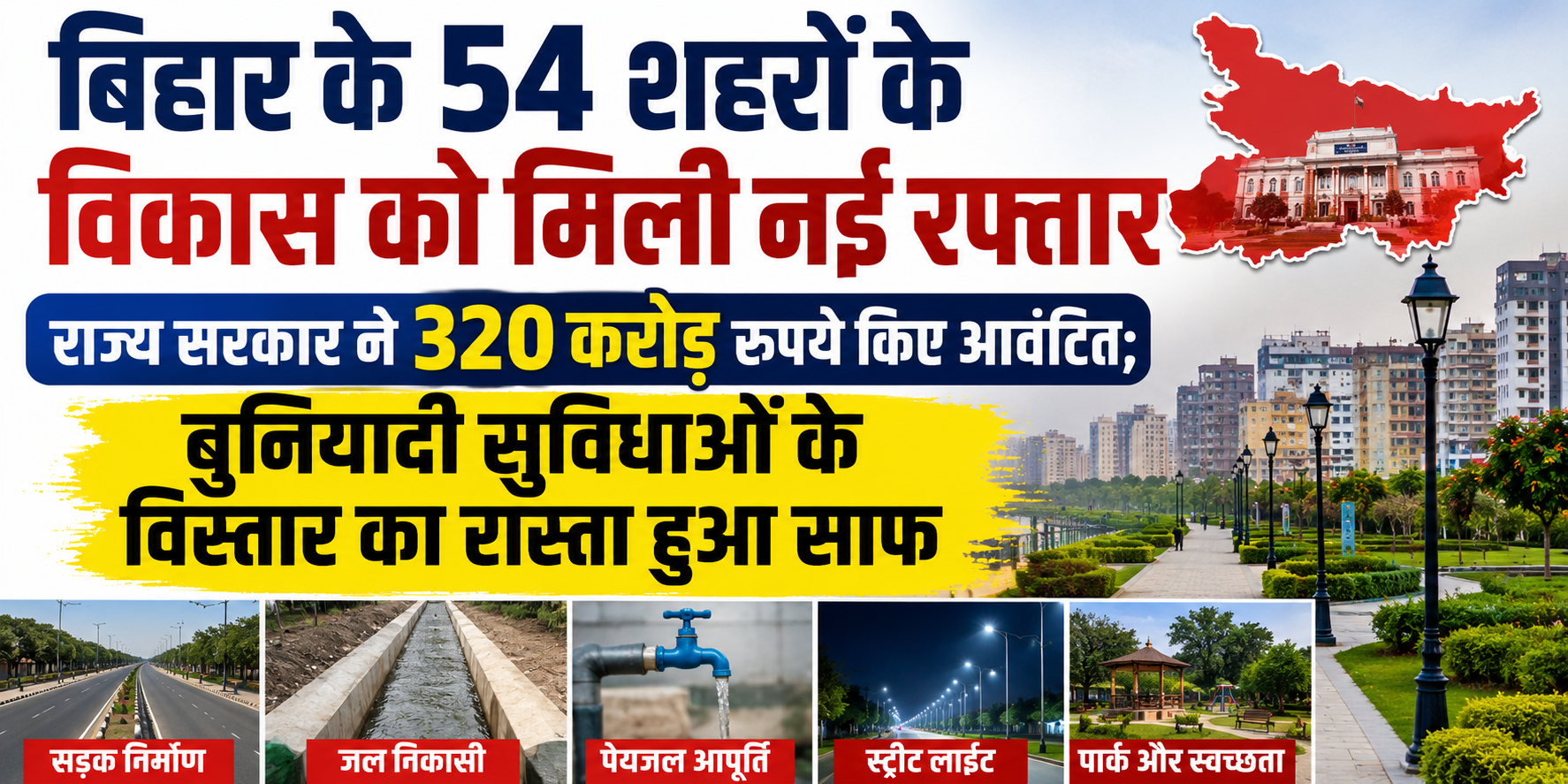
Bihar Allocates ₹320 Crore for Development of 54 Cities, Paving the Way for Better Urban Infrastructure
Patna: In a major push to urban development, the Bihar Government has allocated ₹320 crore for the comprehensive development of 54 cities across the state. With this financial assistance, long-pending infrastructure projects in the selected urban local bodies are expected to gain momentum, paving the way for improved civic amenities and better quality of life for residents.
The allocated funds will be utilized for strengthening urban infrastructure, including roads, drainage systems, drinking water supply, street lighting, parks, sanitation facilities, and other essential public services. The government believes that with rapid urbanization, expanding and upgrading civic infrastructure has become essential to meet the growing needs of urban residents.
Development Projects to Begin in 54 Cities
According to the Urban Development and Housing Department, 54 municipal bodies across different districts of Bihar have been selected under this initiative. Development projects will be approved based on the specific needs of each city, with priority given to works that directly benefit the public.
The projects are expected to include construction of new roads, repair of damaged roads, development of drainage networks, expansion of drinking water pipelines, installation of LED street lights, construction of public toilets, improvement of sanitation services, and enhancement of other civic amenities.
Local urban bodies have been instructed to begin work on priority projects at the earliest so that residents can benefit from improved infrastructure without unnecessary delays.
Major Boost to Basic Civic Amenities
State officials said that increasing urban population has placed considerable pressure on existing infrastructure in many cities. Poor roads, inadequate drainage, waterlogging, insufficient street lighting, and irregular water supply continue to affect daily life in several urban areas.
The newly allocated funds are expected to address these issues by accelerating infrastructure projects and improving essential civic services. Special attention will be given to cities that frequently experience waterlogging during the monsoon season.
Strengthening Urban Local Bodies
The funds will be released to the respective municipal bodies, which will be responsible for implementing the approved projects. The government has directed local authorities to ensure transparency in project selection and complete all works within the prescribed timelines.
Officials have also been instructed to regularly monitor project progress and maintain quality standards throughout the implementation process. Periodic progress reports will be submitted to ensure accountability and timely execution.
Focus on Roads and Drainage
Experts believe that a city's road network and drainage system form the backbone of urban infrastructure. Consequently, a significant portion of the allocation is expected to be spent on constructing new roads, repairing existing ones, and modernizing drainage facilities.
The government plans to improve stormwater management by constructing new drains and upgrading old drainage networks. This is expected to reduce flooding and waterlogging during heavy rainfall, providing long-term relief to residents.
Improved Drinking Water and Street Lighting
The initiative also aims to enhance access to safe drinking water by expanding water supply pipelines, upgrading distribution networks, and carrying out essential maintenance work.
To improve public safety and energy efficiency, LED street lights will be installed along major roads, residential areas, markets, and public spaces. Better street lighting is expected to make cities safer while reducing electricity consumption.
Greater Emphasis on Cleanliness and Green Spaces
Apart from physical infrastructure, the government also plans to improve sanitation, strengthen waste management systems, and beautify public spaces. Funds may also be used to develop parks, expand green areas, and maintain recreational spaces for residents.
The objective is not only to improve infrastructure but also to create cleaner, greener, and more livable urban environments.
Employment and Economic Growth
The ₹320 crore development package is expected to generate substantial direct and indirect employment opportunities during the implementation phase. Increased construction activity will benefit sectors such as building materials, transportation, engineering, and related services.
Improved urban infrastructure is also expected to support local businesses by enhancing connectivity and creating a more favorable environment for trade and investment.
Direct Benefits for Citizens
Residents are likely to benefit significantly from better roads, improved drainage, reliable drinking water, enhanced street lighting, and cleaner public spaces. These improvements are expected to make daily life more convenient while increasing the efficiency and attractiveness of urban centers.
Urban planning experts believe that timely completion of these projects will also encourage private investment and commercial activities in the selected cities.
Government Reaffirms Commitment to Urban Development
The Bihar Government has consistently emphasized balanced urban development across the state. The allocation of ₹320 crore for 54 cities is being viewed as another important step toward modernizing urban infrastructure and improving public services.
According to urban development experts, if the projects are implemented efficiently and within schedule, several medium-sized and smaller cities in Bihar could witness significant transformation in the coming years. This would improve the standard of living for residents while contributing to the state's long-term economic growth.
Overall, the ₹320 crore allocation for the development of 54 cities represents a major investment in Bihar's urban infrastructure. The success of the initiative will depend on the timely and transparent execution of projects so that citizens can fully benefit from improved civic amenities and sustainable urban development.


