
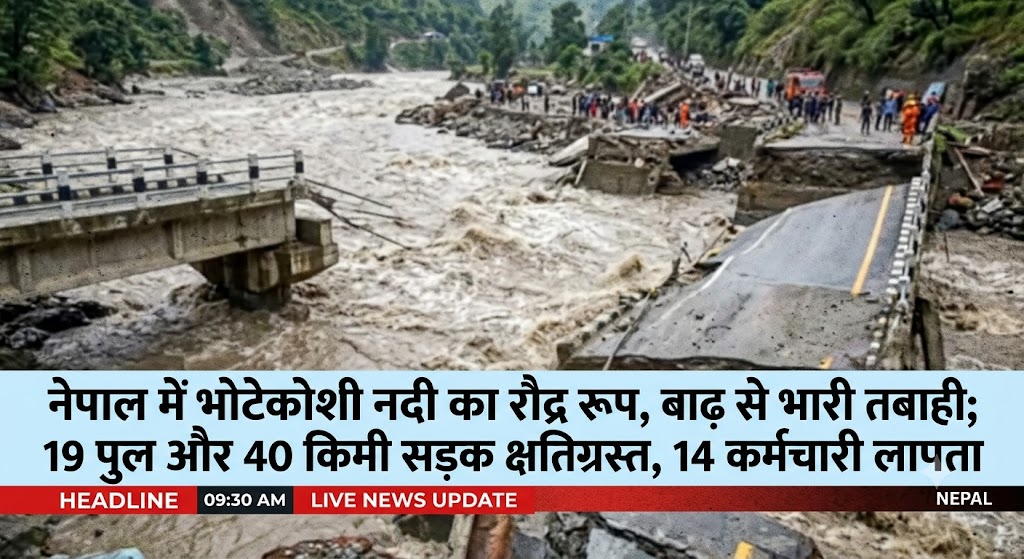
Bhotekoshi River Turns Fierce, 19 Bridges and 40 Km of Roads Damaged; 14 Customs Office Employees Missing
Kathmandu: The Bhotekoshi River suddenly turned violent on Wednesday morning, causing widespread destruction within hours in Nepal's border areas. The powerful current damaged several bridges and roads, while 14 employees associated with the Rasuwagadhi Customs Office have been reported missing. Connectivity to several areas has also been disrupted.
The Nepalese government has taken the situation seriously and has begun coordinating with China to determine the reasons behind the unusually rapid rise in the river's water level. Since the affected area is close to the international border, coordination between authorities of both countries is considered important for understanding the river's flow and the possible causes of the sudden rise.
Nepal has launched a large-scale rescue and relief operation. Helicopters are being used to evacuate people from affected areas, while the Nepalese Army and other security agencies have also been deployed.
River Water Level Rose Suddenly
The water level of the Bhotekoshi River rose sharply on Wednesday morning.
Within a short period, the powerful current began affecting areas along the river. The force of the water damaged infrastructure and disrupted transportation.
The sudden flooding created a difficult situation for local residents and authorities. Rescue teams were mobilized to evacuate people from vulnerable locations.
Food, drinking water, transportation and safe shelter have become major concerns for people living in the affected areas.
19 Bridges Damaged
One of the most serious consequences of the flooding has been damage to roads and bridges.
According to the available information, 19 bridges over the Trishuli River have been damaged.
The damage to bridges has disrupted connectivity between several areas. Authorities are assessing the condition of the affected structures.
Once the water level recedes, detailed inspections will determine the extent of the damage. Temporary or permanent repairs will be undertaken wherever possible.
40 Kilometers of Roads Damaged
The flooding has not only damaged bridges but has also affected approximately 40 kilometers of roads.
The strong flow of water has damaged several stretches of road. In some areas, road edges have been washed away and debris has accumulated on the routes.
The disruption of road connectivity could make it difficult to transport relief supplies to affected areas.
Teams from the Roads Department are inspecting damaged sections and assessing the situation. Authorities are also considering alternative routes wherever normal road connectivity has been disrupted.
Chaos at Rasuwagadhi Customs Office
The Rasuwagadhi Customs Office has also been affected by the flooding.
The disappearance of 14 employees associated with the customs office has increased concern among authorities.
According to Nepal's Home Ministry, 36 permanent employees were working at the office. Of these, 11 are currently unaccounted for, while contact has been established with 25 employees.
In addition, four contractual and daily-wage workers were employed at the office. Three of them are reportedly missing, while contact has been established with one.
Search operations are underway to locate the missing employees.
Search for Missing Employees Continues
Security forces and rescue teams have launched a search operation following reports that customs employees are missing.
The strong current and high water levels are creating major challenges for rescuers.
The immediate priorities are to locate the missing employees and evacuate people from areas at risk.
Families of the missing employees are also extremely concerned. Authorities are attempting to provide them with available information while continuing search operations.
12 Helicopters Deployed for Rescue
The Nepalese government has deployed 12 helicopters for relief and rescue operations.
The fleet includes four helicopters belonging to the Nepalese Army and eight helicopters from the private sector.
The helicopters are being used to reach areas that have become difficult to access because of damaged roads and bridges.
They can also be used to evacuate stranded residents and transport essential relief supplies to isolated areas.
Security Agencies From Four Districts Deployed
The Nepalese government has strengthened security and rescue operations in the affected areas.
Security agencies from Dhading, Nuwakot, Rasuwa and Chitwan have been deployed for relief and rescue operations.
Local administration, security personnel and rescue teams are coordinating efforts to assist affected residents.
People living near rivers and areas experiencing strong currents are being advised to move to safer locations and follow instructions issued by authorities.
Nepal Begins Coordination With China
The unusually rapid rise in the Bhotekoshi River has prompted Nepal to begin coordination with China.
Because the affected region is close to the Nepal-China border, sharing information about river conditions and water flow is considered important.
Nepalese authorities are trying to determine why the river's water level increased so rapidly.
Officials are communicating with relevant authorities and Chinese counterparts to gather information about the situation.
Understanding the reasons behind the sudden rise could help authorities improve preparedness for similar incidents in the future.
Border Connectivity Disrupted
The disruption of transportation in the border region is another major concern.
Roads and bridges are important for transportation and trade between Nepal and China. Damage to this infrastructure could affect normal movement and commercial activities.
The Rasuwagadhi Customs Office is an important facility for border-related trade. Damage to the office and the disappearance of several employees have added to the seriousness of the situation.
The authorities will therefore have to deal not only with rescue operations but also with restoring essential services and connectivity in the border region.
Roads Department Begins Damage Assessment
Teams from Nepal's Roads Department have started inspecting damaged routes.
With around 40 kilometers of roads reportedly affected, the department's immediate priority is to assess the condition of important transportation routes.
Where roads have become completely inaccessible, authorities may need to establish alternative routes.
The safety of damaged bridges is also being assessed. Traffic may need to be restricted on unsafe structures to prevent further accidents.
Major Challenges for Rescue Operations
Rescue operations in the Bhotekoshi region are difficult because of the strong river current and damaged infrastructure.
In several places, damaged roads and bridges have made it difficult for rescue teams to reach affected communities by land.
This is one of the reasons helicopters have been deployed.
Authorities are also monitoring weather conditions, river levels and the possibility of landslides in vulnerable areas.
Authorities Urge People to Stay Alert
Residents are being advised to stay away from the river and surrounding areas.
During floods, water levels can rise suddenly and strong currents can become extremely dangerous.
People are being urged to remain in safe locations and follow instructions issued by local authorities.
The availability of relief shelters and safe locations will also be important for families whose homes or transportation routes have been affected.
Major Challenge for Nepal
The sudden flooding of the Bhotekoshi River has created several challenges for Nepal.
The government must evacuate people to safety while simultaneously beginning the process of restoring damaged infrastructure.
Locating the missing customs employees remains one of the most urgent priorities.
Determining why the river level rose so rapidly, including through coordination with China, will also be important for future disaster preparedness.
Authorities Closely Monitoring the Situation
Authorities are closely monitoring the river's water level and conditions in affected areas.
Rescue and relief teams continue to operate, while the deployment of helicopters is expected to improve access to difficult and isolated locations.
The Roads Department is also working on assessing damaged routes and planning restoration of transportation links.
The immediate priorities remain locating missing employees, evacuating people from dangerous areas and providing assistance to those affected by the floods.
The sudden flooding of the Bhotekoshi River has caused widespread destruction in Nepal's border region. Nineteen bridges have been damaged and approximately 40 kilometers of roads have been affected. Fourteen employees associated with the Rasuwagadhi Customs Office have been reported missing, although contact has been established with several other employees.
Given the seriousness of the situation, Nepal has deployed 12 helicopters, including four operated by the Nepalese Army and eight from the private sector, for relief and rescue operations. Security agencies from Dhading, Nuwakot, Rasuwa and Chitwan have also been mobilized.
Meanwhile, Nepal has begun coordinating with China to investigate the reasons behind the unusually rapid rise in the river's water level.
In the coming days, the key priorities will be locating missing people, evacuating residents from vulnerable areas, repairing damaged roads and bridges, and restoring connectivity in the border region.
For now, the biggest challenge facing Nepalese authorities is to protect affected residents and restore essential services as quickly as possible amid the widespread damage caused by the sudden flood.


