
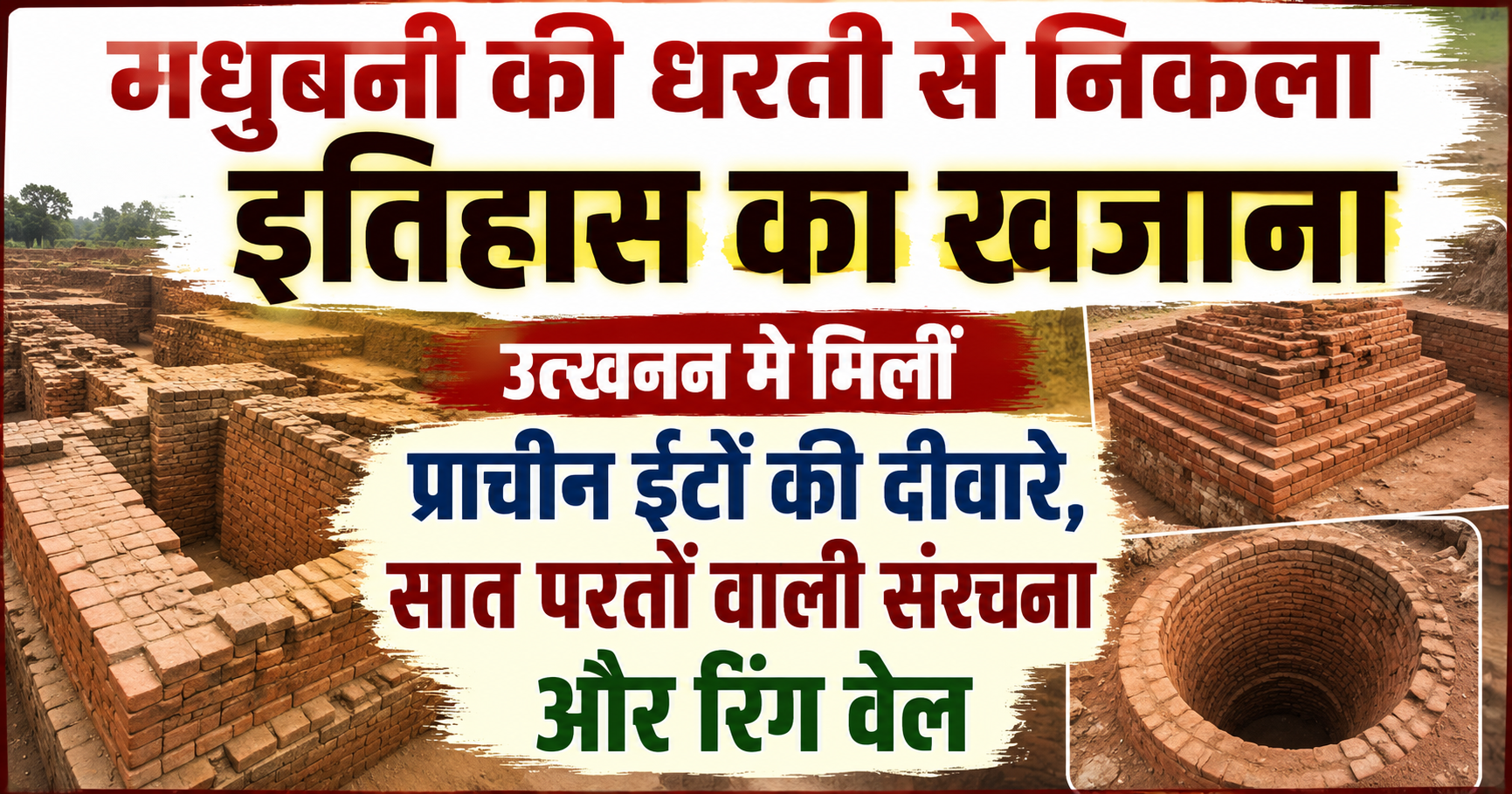
Ancient Historical Remains Unearthed in Bihar's Madhubani, Excavation Reveals Brick Walls, Seven-Layer Structure and Ring Well
Madhubani: A significant archaeological discovery has emerged from Bihar's Madhubani district, shedding new light on the region's rich historical and cultural heritage. During a scientific excavation conducted by the Archaeological Survey of India (ASI), several important ancient structures have been uncovered, including brick walls, a seven-layer brick structure, a courtyard, flooring, and a ring well. Archaeologists believe these findings could play a crucial role in understanding the ancient civilization that once flourished in the Mithila region.
Janata Dal (United) Working President and Rajya Sabha MP Sanjay Jha shared details of the discoveries, saying that the excavation has revealed remarkable evidence of Bihar's glorious past. According to him, these findings are not only important for Bihar but also for India's archaeological and cultural history.
Major Archaeological Discoveries
According to officials associated with the excavation, several well-preserved ancient structures have been unearthed. The excavation has revealed sturdy brick walls constructed with remarkable precision, indicating advanced architectural skills.
One of the most notable discoveries is a seven-layer brick structure, which archaeologists believe may have been part of an important public or residential complex. The systematic arrangement of the bricks suggests sophisticated planning and engineering.
The excavation has also uncovered a courtyard and ancient flooring, providing evidence of an organized settlement with planned residential or administrative buildings.
Another significant discovery is a ring well, a circular brick-lined structure commonly used in ancient India for water supply, drainage, or sanitation. Such structures are considered important indicators of well-developed urban planning.
Evidence of an Advanced Ancient Settlement
Historians believe the newly discovered remains point toward the existence of a well-planned and advanced settlement in the region. The quality of construction, the layout of the structures, and the architectural techniques indicate that the inhabitants possessed considerable expertise in urban planning and civil engineering.
Experts say that if further excavation reveals additional structures or artifacts, the site could significantly reshape the understanding of Bihar's ancient history and provide fresh insights into the development of civilization in the Mithila region.
Sanjay Jha Welcomes the Discovery
Reacting to the findings, JD(U) leader Sanjay Jha expressed happiness over the excavation results, stating that Madhubani has always been known for its rich cultural and historical legacy.
He said that the discoveries—including the ancient brick walls, seven-layer brick structure, courtyard, flooring, and ring well—suggest that the area once served as an important center of habitation or administration. He expressed hope that ongoing excavations would reveal even more valuable historical evidence.
Potential Boost for Tourism
Experts believe that if the archaeological site is properly preserved and developed, it could become one of Bihar's major heritage tourism destinations. Similar to Nalanda, Vaishali, and Vikramshila, this site could attract historians, researchers, archaeologists, and tourists from across India and abroad.
Tourism specialists also point out that the development of the site could generate employment opportunities for local communities while benefiting hotels, transportation services, handicrafts, and other businesses in the region.
Scientific Analysis to Reveal More
Archaeologists will now conduct detailed scientific studies of the unearthed remains. The bricks, soil samples, construction techniques, and other materials will undergo laboratory analysis to determine the site's age and historical significance.
If future excavations uncover pottery, coins, sculptures, inscriptions, or other artifacts, researchers may gain valuable information about the region's social, economic, religious, and cultural life during ancient times.
A New Chapter in Mithila's History
The Mithila region has long been recognized as an important center of learning, philosophy, literature, and culture. Historians believe that these archaeological discoveries could further strengthen its historical significance.
Experts say that successful dating of the structures may establish the existence of a well-developed settlement that flourished thousands of years ago, offering fresh perspectives on the evolution of civilization in northern Bihar.
Excitement Among Local Residents
The discoveries have generated great enthusiasm among local residents. Many people have been visiting the excavation site to witness the ongoing archaeological work.
Villagers expressed pride that their region is contributing valuable evidence to India's ancient history. They have urged the government to preserve the site and develop it as a heritage destination for future generations.
Need for Preservation
Archaeologists emphasize that discovering ancient remains is only the first step; preserving them is equally important. Historical structures are vulnerable to weather, moisture, and human interference, making scientific conservation essential.
Experts have recommended comprehensive documentation, careful preservation, and long-term protection so that future generations can study and appreciate this valuable cultural heritage.
Madhubani Moves Closer to Reclaiming Its Ancient Legacy
The archaeological discoveries in Madhubani mark an important milestone in uncovering Bihar's rich historical past. The ancient brick walls, seven-layer structure, courtyard, flooring, and ring well collectively suggest that the site may once have been a well-planned and prosperous settlement.
As excavation work continues and scientific analysis progresses, archaeologists expect more significant findings to emerge. If further discoveries support current evidence, Madhubani could earn recognition not only for its celebrated art and culture but also as one of India's important archaeological and historical heritage sites.


