
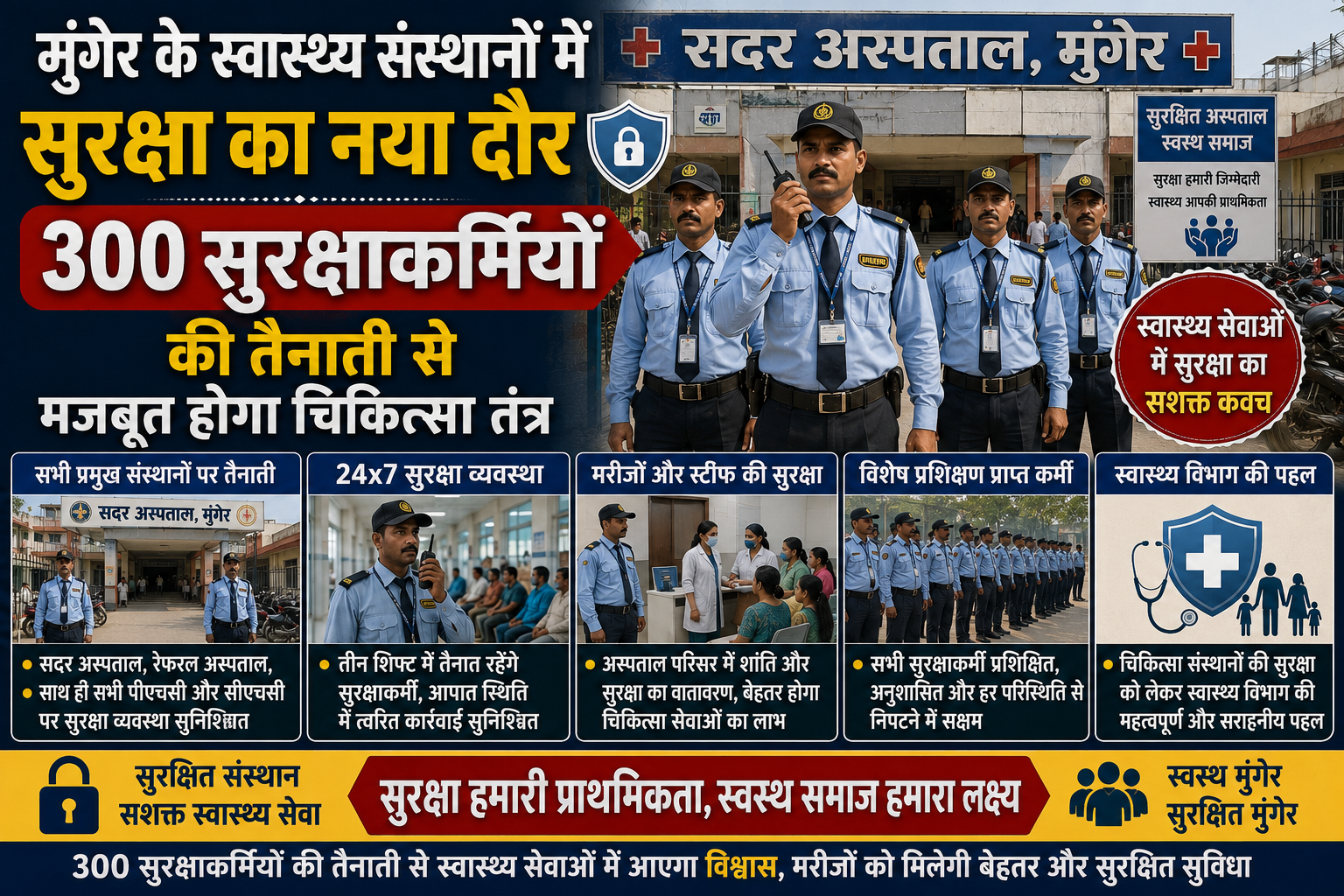
A New Era of Security in Munger’s Health Institutions — Medical System Bolstered by the Deployment of 300 Security Personnel
In any hospital, the quality of healthcare services depends not only on doctors and medicines but equally on a secure environment. Taking a major step toward making health services in Munger district safer and more streamlined, the Health Department has taken a significant initiative. Recently, the responsibility for securing Sadar Hospital and other major health centers in the district has been handed over to a new security agency. This transition is being seen as a revolutionary step toward ensuring a safe environment for patients, their relatives, and medical staff.
The New Structure of the Security Apparatus: A Force of 300
According to official sources from the Health Department, a total of 300 security personnel have been deployed across various government health institutions in the district through the new agency. This deployment is not just for increasing numerical strength, but is aimed at covering sensitive areas within the hospitals. Key features of this new security team include:
Comprehensive Deployment: A robust security net has been spread across Sadar Hospital (Munger), Sub-divisional hospitals, and Primary Health Centers (PHCs).
Role of Female Security Personnel: This 300-member team includes 12 female guards. Their presence in female wards, maternity wards, and emergency wards will not only boost the confidence of female patients but also act as a deterrent against any potential untoward incidents.
Three-Tier Security: 24/7 security has been ensured at sensitive points such as the main entrance, emergency ward, and medicine distribution centers.
Selection Process and Standards for the Security Agency
Before selecting this new agency, the Health Department followed stringent standards. Considering past security lapses—such as unnecessary overcrowding, unauthorized entry of outsiders into wards, and disturbances within hospital premises—the agency has been given special instructions.
Discipline and Training: The security personnel have been specially trained to behave in accordance with the hospital environment and to remain composed during times of crisis.
Uniform and Identification: All security personnel will now be deployed in a prescribed uniform and with an ID card, allowing patients and their relatives to easily identify them and seek assistance for any issues.
Why Was This Step Necessary?
For some time, there had been persistent complaints regarding security in Munger’s government hospitals:
Chaos and Crowding: Massive crowds accompanying patients often obstructed medical operations.
Misbehavior with Medical Staff: Frequent reports surfaced regarding relatives of patients misbehaving with doctors and nurses.
Control Over Illegal Activities: The gathering of anti-social elements within the hospital premises was a major challenge, which is now being addressed through this new team.
Expectations from the New System
Local administration and health officials expect that the deployment of 300 security personnel will bring about the following positive changes:
Peaceful Environment: Controlling unnecessary crowds will provide a calm environment for patients to receive proper treatment.
Boosting Doctors' Morale: When medical staff feel secure, they will be able to dedicate their full attention to patient care.
Protection of Assets: The security of government equipment and hospital property will be ensured, helping to prevent recurring thefts or damages.
Future Roadmap: Synergy Between Technology and Human Effort
The Health Department's plan is not limited to human deployment alone. There are plans to integrate these security personnel with CCTV cameras in the near future. Personnel have been instructed to monitor suspicious activities via cameras and report to officials in time. This synergy between 'man and technology' will be instrumental in making hospital security impregnable.
This new security arrangement in Munger’s government health institutions is not merely an administrative change; it is a process to restore the public's faith. A hospital is truly functional only when it is secure, allowing doctors to serve without fear and patients to benefit from better health services without anxiety. This decision by the Health Department will certainly take Munger’s medical system to new heights.


