
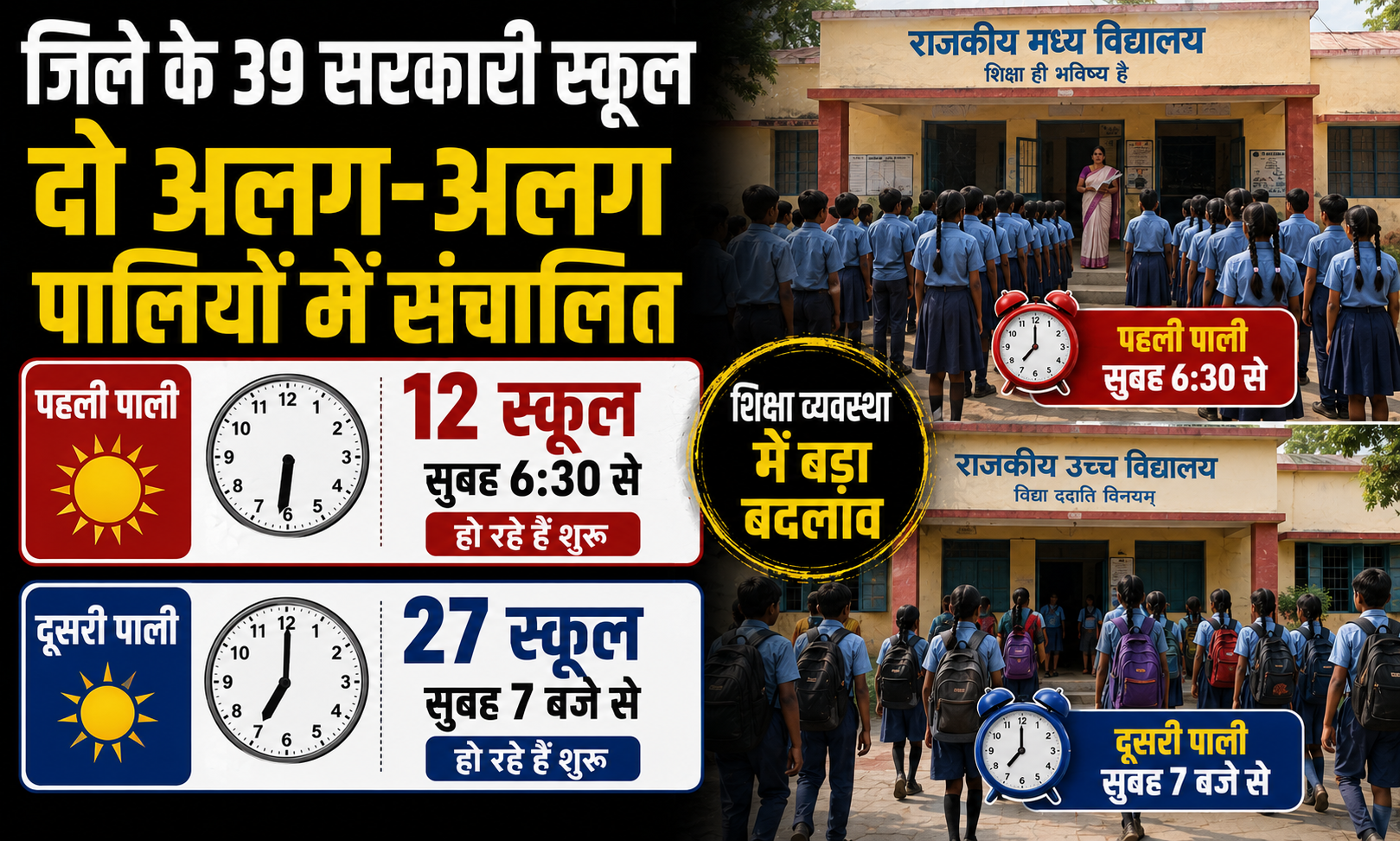
39 Government Schools in the District Operating in Two Separate Shifts, 12 Schools Starting at 6:30 AM and 27 Schools at 7:00 AM
A major and startling piece of news has emerged regarding the education department and the administrative system of Muzaffarpur district. The extent to which basic facilities and infrastructure are lacking in the district can be clearly gauged by looking at the current state of government schools. Due to a severe shortage of classrooms, 39 government schools in Muzaffarpur district are forced to operate in two separate shifts. Due to the lack of space and a high number of students, the administration has been compelled to take this unique and mandatory step, which is also impacting the daily routines of students and teachers.
What is the Whole Matter? Shortage of Classrooms Becomes a Major Crisis
This entire issue is linked to government schools across various rural and urban areas of Muzaffarpur district. While the state government and education department emphasize improving the quality of education and ensuring 100% attendance of children, the ground reality appears to be starkly different.
Lack of Classrooms: There are many schools in the district where the number of enrolled students is in the thousands, but an adequate number of classrooms are not available for them to sit. Education was being disrupted due to the operation of multiple classes in a single room or severe space constraints.
Two-Shift System: To tackle this grim problem and ensure children's education is not disrupted, it was decided in coordination with the education department and local administration to conduct classes in these schools in two shifts.
39 Schools of the District Divided into Two Shifts
According to statistics, a total of 39 government schools in Muzaffarpur district are being run under this two-shift system, which have been divided into two separate schedules:
Schools Starting at 6:30 AM: A total of 12 government schools in the district are being operated starting earliest at 6:30 AM so that the classes for the first-shift students can be completed on time.
Schools Starting at 7:00 AM: Additionally, the remaining 27 government schools are commencing their first shift at 7:00 AM.
Due to these varied schedules, children, parents, and teachers are facing a lot of running around and hassle during the morning hours.
Growing Hardships for Students and Parents
Although operating schools somehow becomes possible through this two-shift system implemented due to the shortage of classrooms, practical aspects are causing severe difficulties for children and their parents.
Time Constraints and Distance: For schools operating from 6:30 AM or 7:00 AM, children coming from far-flung villages have to wake up and get ready very early. Especially for rural girls and young children, reaching school so early is often neither safe nor convenient.
Pressure on Teachers: Running a single school in two separate shifts places additional pressure on teachers' working hours and administrative management. Often, the same teacher has to render services in both shifts, leaving them fatigued and mentally stressed.
Questions on the Education System and the Need for Infrastructure
This sequence of events has once again exposed the hollow claims of infrastructure and development in government schools.
Questions on Fund Utilization: Experts and local intellectuals state that while the government allocates budgets worth crores of rupees in the name of education, such a shortage of classrooms on the ground indicates either improper implementation of schemes or misuse of funds.
Demand for Permanent Solutions: Academicians and parents have demanded the district administration and education department construct additional classrooms in these 39 schools as soon as possible, rather than relying on a temporary two-shift arrangement. Until new buildings or classrooms are constructed, ensuring the smooth education of children will remain a major challenge for the administration.


