
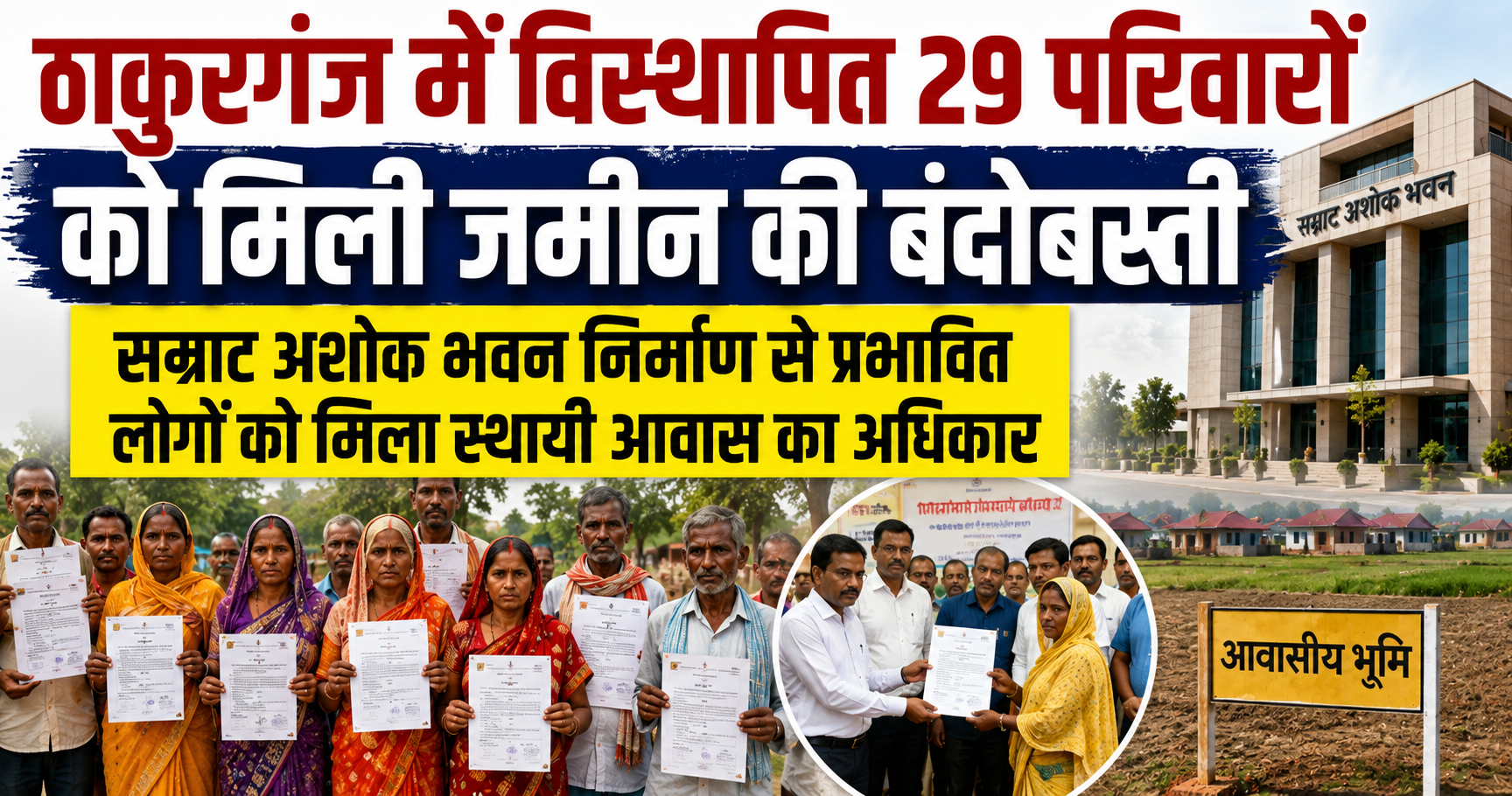
29 Displaced Families in Thakurganj Receive Land Settlement Certificates, Bihar Government Clears Way for Permanent Housing
Thakurganj (Kishanganj): In a significant step toward the rehabilitation of landless and development project-affected families, the Bihar Government has provided land settlement certificates to 29 families who were displaced during the construction of the Samrat Ashok Bhavan in Thakurganj. With the issuance of these certificates, the beneficiary families are now legally entitled to build permanent homes on their allotted land. The district administration described the initiative as an important milestone in ensuring social justice, rehabilitation, and a dignified life for displaced and landless citizens.
The land settlement certificate distribution ceremony was organized under the supervision of the local administration and attended by government officials, public representatives, and the beneficiary families. During the event, officials emphasized that the government's objective is not only to implement development projects but also to ensure that people affected by such projects receive proper rehabilitation and support.
During the construction of the Samrat Ashok Bhavan, several families had to vacate their homes. For a long time, these families had been demanding permanent rehabilitation and legal ownership of land. With the issuance of the settlement certificates, they can now construct permanent houses on land legally registered in their names. Beneficiaries welcomed the decision, saying it has given them an opportunity to secure their future after years of uncertainty.
Officials stated that the state government has made the rehabilitation of landless and displaced families a priority. Under this policy, eligible families were identified, and after completing the necessary legal procedures, land was formally allotted to them. They further said that eligible beneficiaries would also be connected with various government housing schemes so they could build permanent homes as soon as possible.
Speaking at the ceremony, officials noted that land ownership represents much more than property—it provides social security, stability, and dignity. For families who previously owned no land, this initiative is expected to bring long-term economic security and improve their overall quality of life.
The beneficiary families expressed gratitude to the government and district administration, stating that they can now plan for a more secure future for their children. Many said they had faced years of hardship while living in temporary accommodations after being displaced. Receiving legal ownership of land has given them renewed hope for building permanent homes and leading stable lives.
Officials also reiterated that the government's intention is to ensure that no eligible landless or displaced family is deprived of the benefits of welfare schemes. Surveys and verification processes are continuing to identify additional eligible families, and similar assistance will be extended wherever required.
Local public representatives praised the initiative, saying that development and rehabilitation must go hand in hand. According to them, the success of any infrastructure or public development project should be measured not only by its completion but also by how effectively the affected families are rehabilitated. They urged the administration to ensure that the beneficiaries also receive the benefits of other government welfare programs.
Experts believe that land ownership is one of the strongest foundations for economic empowerment. Families with legal ownership of land have easier access to housing schemes, bank loans, government assistance programs, and other public services. As a result, land ownership contributes significantly to improving both social and economic conditions.
The district administration advised beneficiaries to keep all land-related documents safely and complete the construction of their homes in accordance with applicable regulations. Officials also assured them that the concerned departments would provide any administrative assistance required during the process.
The initiative is being viewed as an important example of the Bihar Government's rehabilitation policy. According to the administration, protecting the rights and interests of families affected by development projects remains a key priority. Similar initiatives are expected to continue in the future to help landless and displaced families become part of the state's mainstream development process.
The distribution of land settlement certificates to 29 displaced families in Thakurganj is expected to bring long-term stability and security to their lives. It also sends a positive message that development and humanitarian responsibility can move forward together. For these families, the opportunity to build a permanent home represents not only a new beginning but also the promise of a more secure and dignified future.


